By The Worldonomics Times
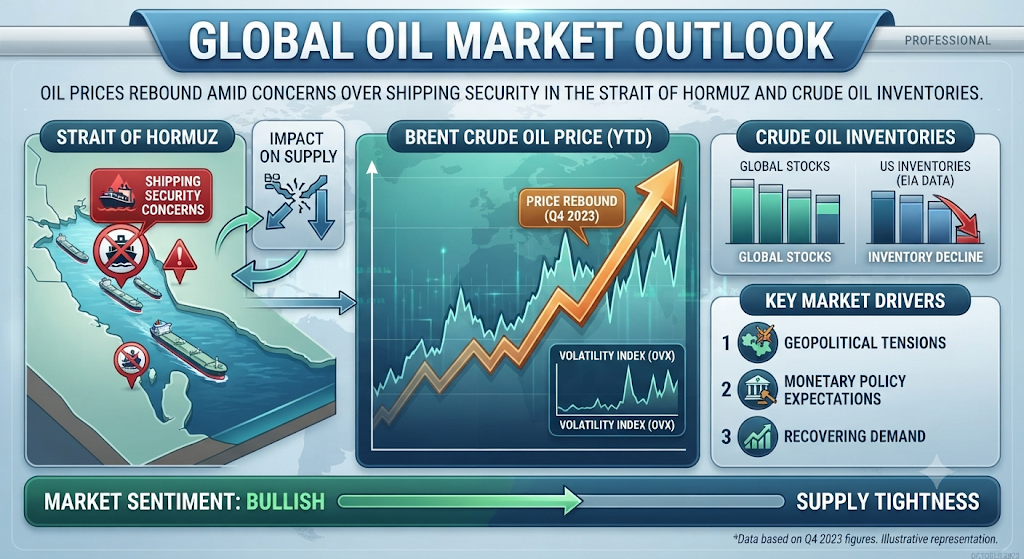
Global oil prices have experienced renewed volatility as concerns over shipping security in the Strait of Hormuz and uncertainty surrounding crude oil inventories influence market sentiment. Prices moved higher on November 17, 2026, as escalating tensions between the United States and Iran and fresh incidents involving commercial vessels raised fears of potential disruptions to Middle Eastern oil supplies.
Brent crude settled approximately 0.8% higher at $93.14 per barrel, while US West Texas Intermediate (WTI) gained 0.3% to $86.01. However, prices edged lower in early trading on November 18 after reports of rising US crude and fuel inventories. The contrasting movements demonstrate how geopolitical risks and supply-demand fundamentals are pulling the oil market in different directions.
Strait of Hormuz Remains a Critical Oil Supply Route
The Strait of Hormuz is one of the world’s most important energy transportation routes. Located between Iran and Oman, it connects the Persian Gulf with international shipping routes and carries substantial volumes of crude oil and petroleum products from major Middle Eastern producers.
Any disruption to shipping through this narrow waterway can have significant consequences for international energy markets. Countries including Saudi Arabia, Iraq, Kuwait, the United Arab Emirates and Iran depend on Gulf export routes to supply international customers.
Recent security incidents have increased concerns among shipowners, insurers and energy traders. The UK Maritime Trade Operations organisation reported several tanker attacks and incidents in the region during November, including vessels struck by unidentified projectiles. An advisory issued on November 12 classified the regional maritime threat level as severe.
On November 17, an LPG tanker was also struck by a projectile while sailing near Oman, forcing its crew to evacuate. These developments have reinforced concerns that commercial shipping could remain exposed to further attacks even when oil production and export volumes begin recovering.
Oil Prices Respond to Geopolitical Tensions
Geopolitical developments have become an important influence on recent oil price movements.
Escalating military tensions between the United States and Iran have increased uncertainty about the security of energy infrastructure and shipping routes. Reports of attacks involving military facilities and commercial vessels have raised the possibility of further disruptions to regional oil exports.
Oil traders often incorporate a geopolitical risk premium into prices when they believe that future supplies could be interrupted. Even without a complete closure of the Strait of Hormuz, higher insurance costs, longer shipping journeys, vessel diversions and delays can increase the cost of delivering crude oil.
The possibility of attacks on alternative transportation infrastructure has added another concern. Yemen’s Iran-aligned Houthi movement claimed drone attacks on Saudi pumping stations along the East-West pipeline, which Saudi Arabia uses to transport oil towards its Red Sea export terminal, bypassing the Strait of Hormuz.
These developments show that the risks facing energy markets extend beyond the waterway itself.
Rising Crude Oil Inventories Limit Price Gains
While geopolitical tensions have supported oil prices, rising crude inventories in the United States have created downward pressure.
According to market sources citing American Petroleum Institute data, US crude oil stocks increased by approximately 5.28 million barrels in the week ending November 13. Gasoline inventories rose by 5.12 million barrels, while distillate stocks increased by 351,000 barrels.
The inventory increases suggest that available supplies may be more comfortable than previously expected. Higher stock levels can reduce concerns about immediate shortages and encourage traders to take a more cautious approach towards buying oil futures.
On November 18, Brent crude was trading around $92.98 per barrel and WTI around $85.45, reflecting modest declines after the previous session’s gains.
The latest figures also highlight the importance of distinguishing between crude oil inventories and refined petroleum products. Changes in gasoline and diesel stocks can reflect refinery activity, seasonal demand and consumption patterns, making the overall supply picture more complex than crude inventory figures alone.
Global Oil Supply and Demand Remain Uncertain
The international oil market is facing competing forces on both the supply and demand sides.
On one hand, Middle Eastern exports have recovered from earlier disruptions, while higher production from several oil-producing countries has improved supply expectations. The International Energy Agency has indicated that global oil supply could exceed demand in the fourth quarter of 2026.
On the other hand, the recovery remains vulnerable to shipping interruptions and regional instability. The IEA has projected fourth-quarter supply of approximately 105 million barrels per day, around 1.7 million barrels per day above expected demand. This suggests that a potential supply surplus could limit sustained price increases if transportation conditions remain stable.
However, rebuilding inventories takes time, particularly after prolonged supply disruptions. Even when production increases, crude oil must be transported, processed and distributed before additional supplies reach consumers.
Consequently, the market may continue to experience sharp price movements as traders respond to changes in geopolitical conditions, inventory data and expectations of future demand.
Impact on the Global Economy
Oil price volatility has important consequences for the global economy because energy is a major input across transportation, manufacturing, agriculture and electricity generation.
A sustained increase in crude prices can raise fuel costs for airlines, shipping companies, logistics operators and industrial manufacturers. Businesses may pass these additional expenses on to consumers, contributing to inflationary pressure.
Higher energy prices can also complicate decisions by central banks. If fuel and transportation costs push inflation higher, policymakers may find it more difficult to reduce interest rates without risking renewed price pressures.
Oil-importing countries are particularly vulnerable because higher import bills can widen trade deficits, increase pressure on foreign exchange reserves and weaken domestic currencies. Conversely, oil-exporting economies may benefit from higher revenues, although the advantages can be offset by production disruptions and increased security expenditure.
Implications for India
Developments in the Strait of Hormuz are particularly important for India because the country depends significantly on imported crude oil to meet its energy requirements.
Higher international oil prices can increase India’s petroleum import bill and put pressure on the rupee. If elevated prices persist, domestic fuel costs, transportation expenses and manufacturing inputs may also come under pressure.
The impact can extend to sectors such as aviation, road transport, chemicals, fertilisers, logistics and agriculture. Higher diesel and fuel costs can increase distribution expenses, while more expensive energy inputs can affect industrial production and household purchasing power.
Shipping security is equally important for Indian businesses. Disruptions in the Gulf can increase freight charges, insurance premiums and delivery times for energy shipments. Any prolonged interruption could therefore affect both energy security and broader trade activity.
India can reduce some of these vulnerabilities through diversified crude sourcing, strategic petroleum reserves, stronger maritime cooperation and investment in renewable energy. Maintaining reliable supply arrangements will remain essential to managing external economic risks.
The Worldonomics Times View
The recent movement in global oil prices demonstrates the growing influence of geopolitical developments on international energy markets. Concerns about shipping security in the Strait of Hormuz have supported prices, while rising US crude and fuel inventories have limited further gains.
The market is therefore balancing two competing realities: the possibility of renewed supply disruptions and the prospect of a global oil surplus. Neither factor can be considered in isolation.
For energy-importing economies such as India, continued volatility highlights the importance of supply diversification, strategic reserves and careful management of energy costs. Governments and businesses must also prepare for the possibility that shipping disruptions could increase the cost of oil even without a major reduction in global production.
Ultimately, the direction of oil prices will depend on the security of major shipping routes, the pace of inventory rebuilding, production decisions by oil-exporting countries and the strength of global demand. Greater stability in the Middle East and predictable energy supply conditions will be essential for reducing uncertainty in international markets.