Introduction
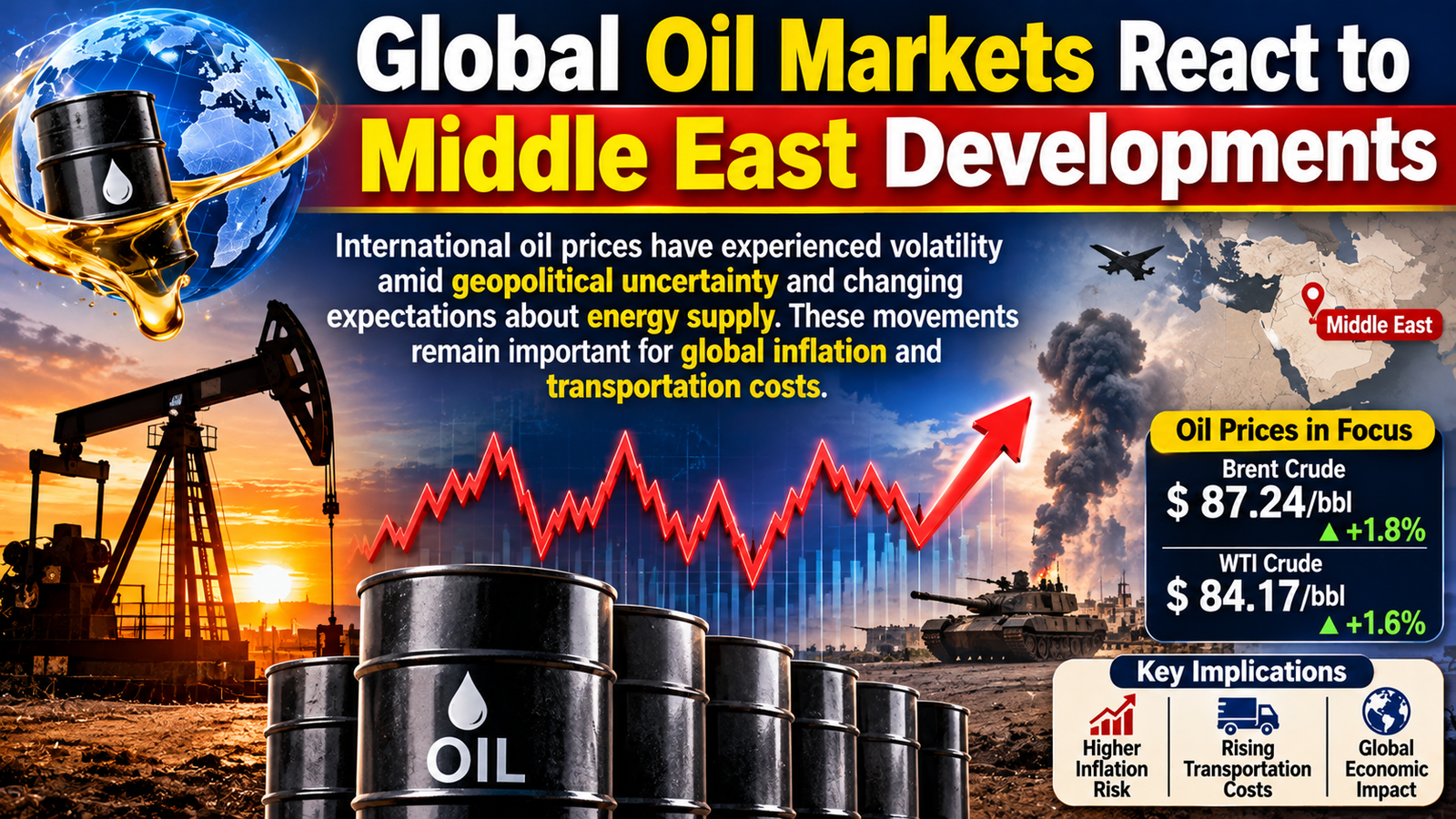
International oil markets are experiencing significant volatility as geopolitical tensions in the Middle East create uncertainty surrounding global energy supplies. Concerns about shipping security, possible disruptions to crude oil exports and changing diplomatic developments have contributed to sharp movements in international oil prices.
The situation is particularly important because the Middle East remains one of the world’s most significant oil-producing regions. Any disruption to its production or transportation infrastructure can influence global energy prices, international trade and economic stability.
Recent market movements demonstrate how quickly oil prices can change in response to political developments. While hopes of diplomatic progress between the United States and Iran have encouraged price declines, renewed attacks on commercial shipping have brought supply concerns back into focus.
Oil Prices Fluctuate Amid Geopolitical Uncertainty
International crude oil prices have experienced considerable fluctuations during November 2026.
On November 10, Brent crude futures declined by approximately 3.15% to $89.65 per barrel, while US West Texas Intermediate (WTI) fell around 2.68% to $84.52. The decline followed signals suggesting that the United States could avoid further military escalation against Iran.
However, the market situation changed on November 11. Renewed attacks on shipping in the Strait of Hormuz pushed oil prices higher. Brent crude rebounded by approximately 1.1% to $92.53 per barrel, while WTI increased by around 0.8% to $86.71.
These movements highlight the influence of geopolitical developments on international energy markets.
Investors are closely monitoring diplomatic negotiations, military developments and shipping activity to assess whether oil supplies can return to more stable conditions.
Strait of Hormuz Remains Critical to Global Oil Supply
One of the biggest concerns for international energy markets is the security of the Strait of Hormuz.
Located between Iran and Oman, this strategically important waterway connects major oil-producing countries in the Persian Gulf with international markets.
A significant volume of the world’s oil and petroleum products normally passes through this route. Any prolonged disruption could affect crude shipments to major importing economies, particularly in Asia.
According to Reuters reporting on November 11, 37 vessels were attacked during October, representing the highest monthly total since the Middle East conflict began.
Recent incidents involving tankers and naval mines have increased concerns about the safety of commercial shipping.
Even if diplomatic negotiations produce an agreement, restoring normal oil transportation may take time. Shipping companies must consider insurance costs, security risks, possible mine clearance operations and the willingness of vessel operators to resume regular routes.
Consequently, geopolitical uncertainty continues to influence oil prices even when actual production levels remain relatively stable.
Global Oil Supply Faces Competing Pressures
Although geopolitical risks are supporting oil prices, other developments are creating downward pressure.
According to the International Energy Agency’s October 2026 Oil Market Report, global oil supply increased to approximately 102.3 million barrels per day in September, supported by higher production from Gulf countries.
The agency also highlighted the possibility of recovering global supply in 2027, although renewed attacks and shipping disruptions could complicate that outlook.
At the same time, the Organization of the Petroleum Exporting Countries and its partners (OPEC+) decided on November 1 to maintain September production levels for December 2026.
This decision reflects the group’s efforts to balance market stability against uncertainty surrounding global demand and supply conditions.
The oil market is therefore facing two opposing forces: geopolitical risks that threaten supply and production developments that could increase the availability of crude oil.
The interaction between these factors will remain important in determining international prices.
Impact on Global Inflation and Transportation Costs
Oil prices play a major role in determining inflation across the global economy.
When crude oil becomes more expensive, transportation companies, airlines, shipping operators and manufacturers generally face higher operating costs.
These expenses can eventually be passed on to consumers through increased prices for goods and services.
Higher fuel costs also influence electricity generation and industrial production in countries that depend heavily on petroleum and other fossil fuels.
The impact can be particularly serious for developing economies, where households spend a significant proportion of their income on transportation, food and essential commodities.
According to the International Energy Agency, prolonged supply disruptions have already placed considerable pressure on global diesel markets. Higher fuel prices can increase the cost of transporting agricultural products, industrial materials and consumer goods.
If energy prices remain elevated, central banks may face additional difficulties controlling inflation while supporting economic growth.
Implications for Major Oil-Importing Economies
The latest developments are particularly important for major oil-importing economies such as China, India, Japan and South Korea.
These countries depend significantly on imported energy to support transportation, manufacturing, electricity generation and industrial development.
Higher crude oil prices increase import expenditure and can place pressure on national trade balances and currencies.
For countries with limited domestic energy resources, prolonged supply disruptions may also create concerns about energy security.
Governments may respond by diversifying suppliers, strengthening strategic petroleum reserves, improving energy efficiency and encouraging investment in alternative energy sources.
The situation demonstrates why reliable energy transportation and diversified supply chains are essential for economic stability.
What It Means for India
India is particularly sensitive to changes in international crude oil prices because it imports a substantial proportion of its petroleum requirements.
Higher global oil prices can increase India’s import bill, potentially widening the trade deficit and placing pressure on the Indian rupee.
The transportation sector is among the areas most directly affected. Higher fuel costs can increase expenses for logistics companies, airlines, road transport operators and businesses dependent on regular deliveries.
Rising energy costs may also contribute to inflation by increasing the prices of food distribution, manufactured products and other essential services.
For the Indian government and policymakers, maintaining energy security remains a major priority.
Diversifying crude oil suppliers, strengthening strategic petroleum reserves, improving domestic refining capabilities and expanding renewable energy production can help reduce exposure to international disruptions.
India’s growing investment in solar power, electric mobility and other alternative energy technologies also provides opportunities to reduce long-term dependence on imported fossil fuels.
The Road Ahead: What Will Determine Oil Prices?
The future direction of international oil prices will depend on several important developments.
First, diplomatic negotiations involving the United States and Iran will remain central to market expectations. Any agreement that reduces regional tensions could encourage lower prices, while renewed military escalation could increase supply concerns.
Second, the security of the Strait of Hormuz will remain critical. Even without direct damage to oil production facilities, shipping restrictions and higher insurance costs can affect the availability and price of crude oil.
Third, global demand and production decisions will influence the market balance. Slower economic growth could reduce oil consumption, while supply restrictions could keep prices elevated.
Investors will also monitor OPEC+ production policy, US crude inventories and developments in other major producing countries.
The Worldonomics Times Views
The recent volatility in global oil markets demonstrates how closely energy prices are connected to geopolitical stability and international economic conditions. Developments in the Middle East can influence crude oil supplies, transportation costs, inflation and financial markets across the world.
While diplomatic progress could help reduce geopolitical risk, the security of energy infrastructure and international shipping routes remains essential for restoring market confidence.
Governments should strengthen energy security through diversified supply sources, strategic reserves and greater investment in renewable energy. Major oil-importing economies, including India, must also improve energy efficiency and reduce excessive dependence on vulnerable supply routes.
For businesses, managing energy costs and developing more resilient supply chains will become increasingly important in an uncertain global environment.
Ultimately, stable oil markets are essential for sustainable economic growth. The latest developments are a reminder that energy security is not merely a regional concern but a global economic priority. The ability of international policymakers to reduce geopolitical tensions and maintain reliable energy transportation will play a major role in determining the future direction of oil prices and global inflation.