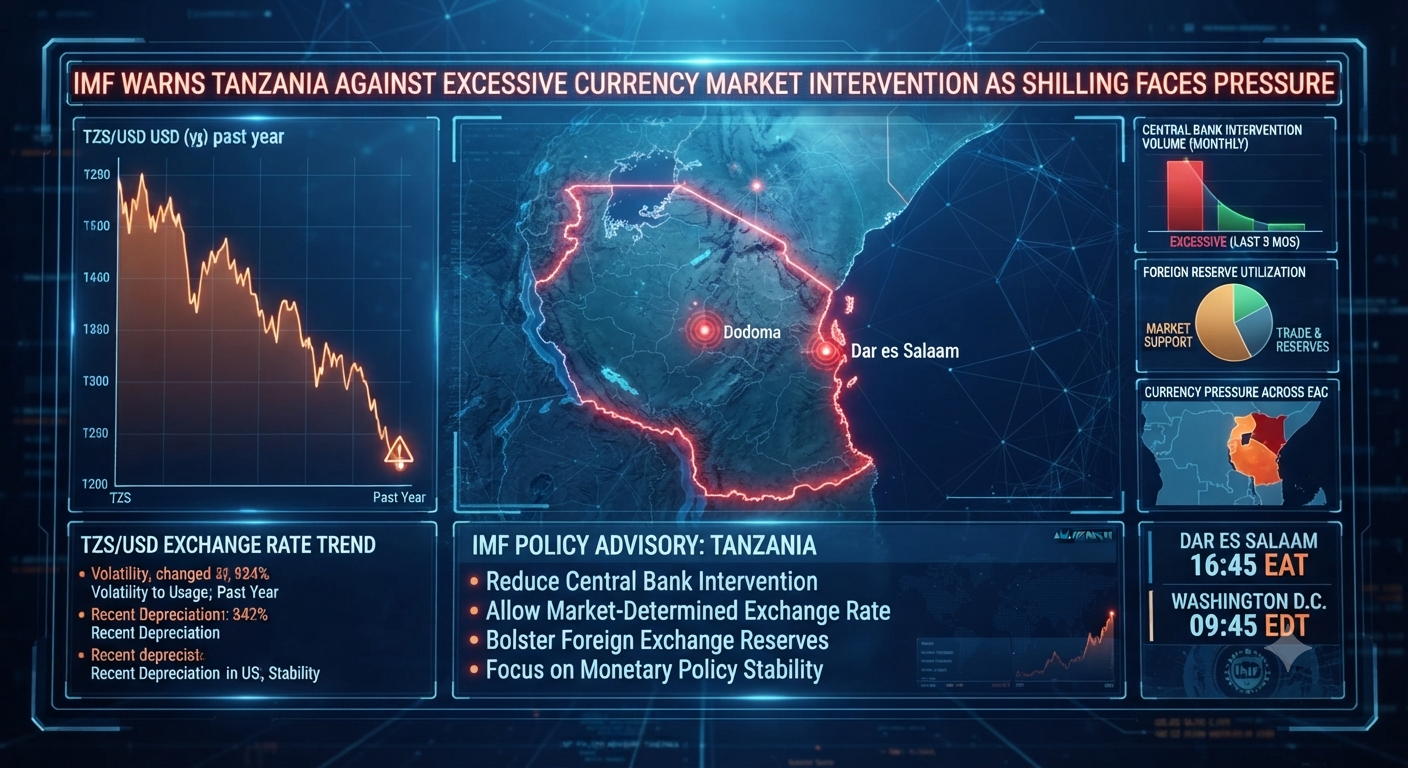
The International Monetary Fund (IMF) has cautioned Tanzania against excessive intervention in the foreign exchange market to support its currency, the Tanzanian shilling, highlighting the importance of exchange rate flexibility and stronger foreign exchange reserves in maintaining economic stability.
In its latest assessment of Tanzania’s economy, the IMF advised the Bank of Tanzania (BoT) to limit currency market intervention to situations involving disorderly market conditions or excessive volatility. It warned that central bank intervention should not be used as a substitute for broader monetary and fiscal policy adjustments.
The Fund also identified financial and operational risks associated with the central bank’s domestic gold purchase programme. Although the initiative has helped diversify Tanzania’s foreign exchange reserves, the IMF believes that its growing scale requires stronger risk assessment, transparency and institutional oversight.
The recommendations come as Tanzania navigates external economic uncertainty, changing commodity prices and pressure on its foreign exchange position.
IMF Calls for Greater Flexibility in the Foreign Exchange Market
The IMF believes that allowing the shilling to adjust in response to market conditions would help Tanzania absorb external economic shocks more effectively.
Foreign exchange intervention is a standard instrument used by central banks to address sudden market disruptions and excessive currency volatility. However, prolonged intervention to maintain a particular exchange rate can place pressure on a country’s foreign currency reserves, particularly when those reserves are relatively limited.
The Fund noted that Tanzania’s foreign exchange reserves remain comparatively low in relation to its external financing needs. It therefore recommended combining greater exchange rate flexibility with efforts to rebuild international reserves.
According to the IMF, intervention should be restricted to addressing disorderly market conditions and market frictions. It should not prevent the exchange rate from responding to changes in economic fundamentals.
This approach is intended to preserve foreign currency buffers while allowing the economy to adjust to movements in international trade, commodity prices and capital flows.
Domestic Gold Purchases Raise Financial and Operational Risks
Alongside currency management, the IMF highlighted concerns about the Bank of Tanzania’s domestic gold purchase programme.
Tanzania is an important gold-producing country, and the central bank’s purchases of domestically produced gold have contributed to the diversification of its reserve assets. Gold can provide an alternative store of value and help reduce reliance on traditional foreign currency reserve holdings.
However, the programme also exposes the central bank to several risks.
The IMF specifically identified operational, valuation and balance-sheet risks associated with domestic gold acquisitions. Changes in international gold prices can affect the value of accumulated holdings, while purchasing, storing and managing physical gold involves operational responsibilities and associated costs.
The programme may also involve activities with quasi-fiscal characteristics, meaning that some operations have financial or economic implications beyond the central bank’s conventional monetary policy responsibilities.
To address these concerns, the IMF recommended that future gold accumulation decisions be supported by comprehensive policy and risk analysis. It also called for regular publication of information covering gold acquisitions, holdings and associated costs.
Another recommendation was to consider transferring the operational and quasi-fiscal aspects of the programme to a separate entity. Such an arrangement could help clarify institutional responsibilities and strengthen the central bank’s focus on its core monetary and financial stability objectives.
Tanzania’s Economic Outlook Remains Resilient but Exposed to Risks
Despite its concerns about currency management and reserve adequacy, the IMF described Tanzania’s economy as resilient in the face of recent external shocks.
The Fund projects real GDP growth of 5.9% in the 2026/27 financial year, with growth expected to average approximately 6% over the medium term. Mining, agriculture and tourism are expected to remain important contributors to economic activity.
Strong exports of gold, manufactured products and agricultural commodities have supported the country’s external position. Improvements in public revenue mobilisation, monetary policy implementation and financial sector supervision have also contributed to economic resilience.
Inflation is expected to remain within the Bank of Tanzania’s target range of 3% to 5% during the 2026/27 financial year.
However, the IMF expects Tanzania’s current account deficit to widen to approximately 2.9% of GDP in the same period, partly reflecting weaker gold prices and persistently elevated oil prices. The deficit is projected to narrow gradually over the following years.
The Fund also considers the country’s foreign exchange reserve position relatively low, reinforcing its recommendation to preserve reserves and allow greater exchange rate adjustment.
External Shocks Could Increase Pressure on the Shilling
Tanzania’s economic outlook remains exposed to developments in international markets.
The IMF identified a prolonged conflict in the Middle East as a significant downside risk. Disruptions to international trade and travel could increase oil prices, raise domestic inflation and create additional pressure on the exchange rate.
Tighter global financial conditions could also affect capital flows and the availability of external financing. A decline in international gold prices would present another challenge by reducing export earnings and potentially weakening government revenue and foreign exchange reserves.
Domestic vulnerabilities could add to these pressures. Climate-related disruptions may increase food and energy prices, while renewed social unrest or delays in economic reforms could affect investor confidence and tourism activity.
Conversely, stronger international gold prices could improve Tanzania’s external position and provide additional support to export revenues.
These risks underline why the IMF is encouraging a policy framework that can respond to changing market conditions without relying excessively on the central bank’s foreign currency reserves.
Implications for Monetary Policy and Investor Confidence
The IMF’s recommendations have important implications for Tanzania’s monetary policy framework and financial markets.
Greater exchange rate flexibility could allow the shilling to respond more naturally to changes in foreign currency demand and supply. However, it may also result in greater short-term currency fluctuations, particularly during periods of external uncertainty.
For import-dependent businesses, exchange rate movements can influence the cost of fuel, machinery, industrial inputs and other imported goods. Exporters may benefit from improved price competitiveness when the domestic currency adjusts, although the overall impact will depend on production costs and market conditions.
Investors will also monitor the central bank’s approach to foreign exchange intervention, reserve management and gold accumulation. Greater transparency around gold purchases and reserve composition could help strengthen confidence in the country’s financial management.
The IMF has also emphasised the importance of continued reforms to improve the business environment, encourage private investment and support job creation. These structural priorities will be important for sustaining growth beyond the mining and commodity sectors.
The Worldonomics Times View
The IMF’s warning highlights the importance of balancing currency stability with the long-term protection of foreign exchange reserves. While central bank intervention can help address sudden market disruptions, attempting to defend a currency against underlying economic pressures can create additional financial vulnerabilities.
For Tanzania, greater exchange rate flexibility could strengthen the economy’s ability to absorb external shocks, provided that monetary policy remains credible and reserve management is carefully handled.
The domestic gold purchase programme also presents an important policy consideration. Gold accumulation can diversify national reserves, but its benefits need to be assessed alongside valuation exposure, operational costs and balance-sheet risks. Regular disclosure and clear institutional responsibilities would help improve accountability.
Tanzania’s projected economic growth provides a supportive foundation, but maintaining that momentum will require continued attention to external stability, fiscal discipline and private-sector development.
Conclusion: The IMF has urged Tanzania to avoid excessive intervention in the foreign exchange market and allow the shilling greater flexibility, while rebuilding foreign currency reserves. Its concerns about the domestic gold purchase programme underline the need for stronger risk management and transparency. The country’s ability to balance currency adjustment, reserve protection and sustainable economic growth will remain central to its financial stability.