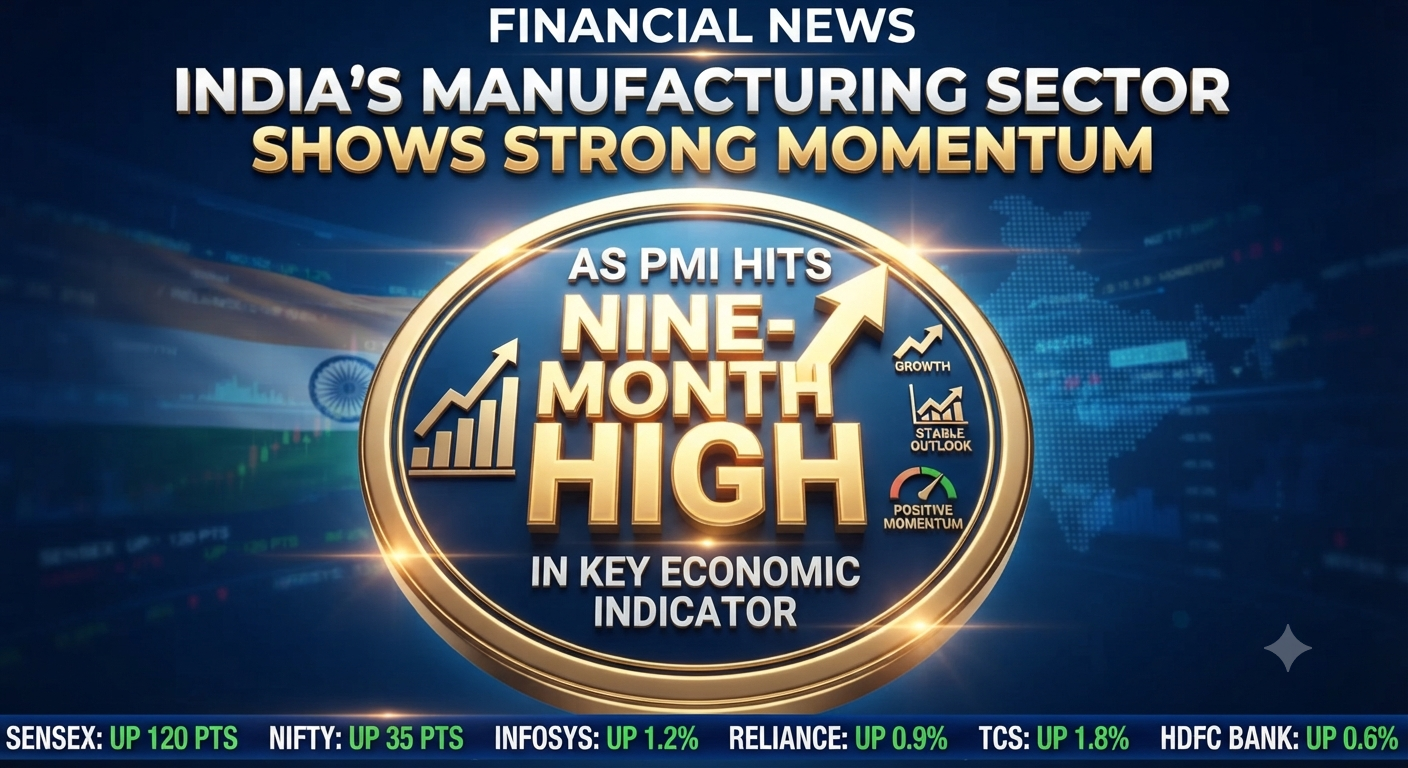
India’s manufacturing sector recorded a stronger performance in November 2026, with the Purchasing Managers’ Index (PMI) reaching a nine-month high on the back of rising factory output and new orders. The improvement reflects continued strength in domestic demand and growing business activity across several industrial segments.
According to the HSBC Flash India Manufacturing PMI survey, the manufacturing index increased to 56.0 in November from 54.7 in October. The reading indicates a faster pace of expansion in the sector and represents its strongest performance since February 2026.
The manufacturing output index also improved, rising to 58.3 from 57.0 in October. This suggests that companies increased production in response to stronger orders and improving sales opportunities.
The latest figures provide an encouraging indication of India’s industrial momentum as the economy moves through the third quarter of FY27. Manufacturing continues to play an important role in economic growth, employment generation, infrastructure development and the expansion of domestic supply chains.
Stronger Output and New Orders Drive Manufacturing Growth
The improvement in manufacturing activity was primarily supported by stronger production and rising demand for goods.
Survey participants reported an increase in new business, with total private-sector new orders growing at their fastest pace since June. Manufacturers benefited from favourable market conditions and the acquisition of new customers.
Demand improved across several industries, including pharmaceuticals, healthcare, chemicals, electronic components, metals, power transmission equipment and infrastructure-related businesses.
The increase in orders encouraged manufacturers to expand production and increase purchasing activity. Companies also stepped up their procurement of raw materials and intermediate goods to meet current and anticipated demand.
This trend is important because stronger order books can encourage businesses to utilise production capacity more efficiently, invest in machinery and consider expanding manufacturing operations.
Domestic Demand Provides Key Support
Domestic demand remained a major driver of the manufacturing sector’s improvement.
India’s large consumer market, infrastructure investment and expanding industrial requirements continue to create opportunities for manufacturers. Demand for automobiles, electronics, construction materials, pharmaceuticals and engineering products supports production across multiple industrial categories.
Government infrastructure spending has also contributed to demand for steel, cement, electrical equipment and industrial machinery. At the same time, private-sector investment in manufacturing facilities and technology is creating additional opportunities for suppliers and component producers.
The latest PMI survey indicated that stronger domestic demand played an important role in accelerating new manufacturing orders.
However, export demand also improved. New export orders across the private sector increased at their fastest pace in four months, although the pace of growth in manufacturing export orders moderated slightly.
This suggests that domestic consumption remains an important source of support while international demand continues to provide additional opportunities for Indian producers.
Manufacturing Employment Records Stronger Growth
The improvement in industrial activity was accompanied by increased hiring.
Manufacturing companies expanded their workforces at the fastest rate in seven months, indicating that businesses were responding to higher production requirements and stronger order volumes.
Employment growth is an important indicator because sustained industrial expansion can create opportunities for skilled and semi-skilled workers across factories, logistics networks, engineering services and supporting industries.
Manufacturing growth can also generate indirect employment in transportation, warehousing, maintenance, packaging and industrial supply chains.
However, employment trends across the broader private sector remained mixed. While manufacturers increased recruitment, service providers marginally reduced their workforce for the first time in nearly a year.
The contrasting performance highlights the importance of strengthening both manufacturing and services to support balanced job creation.
Input Costs Remain Relatively Subdued
Another encouraging development was the relatively moderate increase in manufacturing input costs.
Companies reported only mild increases in operating expenses during November. This provided some relief to manufacturers facing uncertainty over raw material prices, energy costs and transportation expenses.
However, selling-price inflation accelerated compared with October, although it remained modest relative to its historical trend.
The ability to manage input costs is important for maintaining profit margins, particularly for small and medium-sized manufacturers that may have limited flexibility to absorb higher expenses.
Businesses will continue monitoring commodity prices, crude oil movements, freight costs and currency fluctuations because these factors can influence production expenses and pricing decisions.
If input costs remain controlled while demand strengthens, manufacturers may find it easier to maintain profitability and invest in additional capacity.
Purchasing Activity and Inventories Increase
Manufacturers also increased their purchasing activity in November.
Input buying expanded at its fastest pace since May, while stocks of purchased materials recorded their strongest replenishment in nine months. Finished-goods inventories also increased significantly, reaching their highest level since the survey began in March 2005.
These developments indicate that companies were preparing for continued business activity and potential future orders.
Higher inventory levels can help manufacturers respond quickly to customer requirements and avoid production interruptions. However, excessive stock accumulation can also increase storage expenses and tie up working capital.
Businesses will therefore need to balance inventory management with expectations of future demand.
Services Growth Moderates as Manufacturing Leads
Although manufacturing activity strengthened, the services sector experienced a slower pace of expansion.
The HSBC Flash India Services Business Activity Index declined to 55.3 in November from 55.8 in October. Despite the moderation, the reading remained above the 50-point threshold, indicating continued expansion.
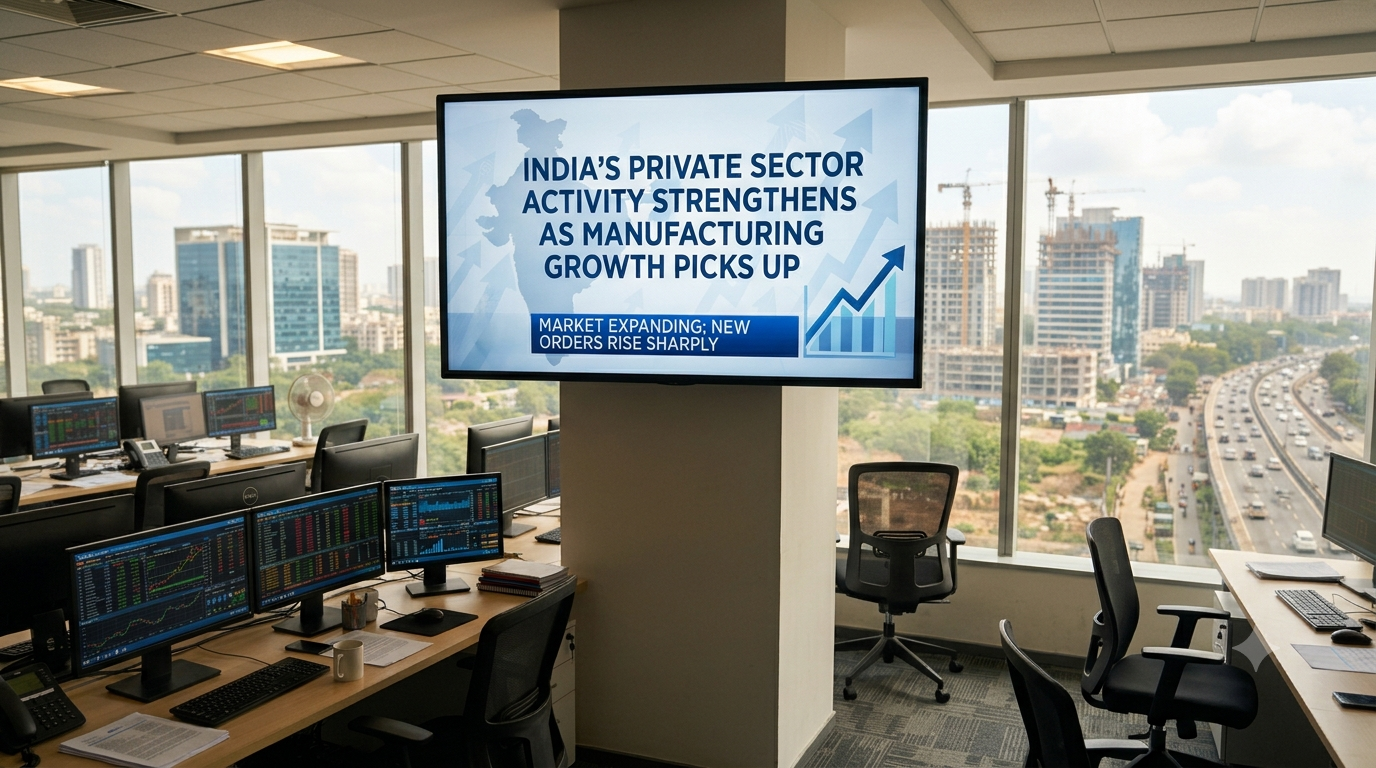
The HSBC Flash India Composite PMI Output Index, which combines manufacturing and services activity, edged up to 56.3 from 56.2.
This indicates that overall private-sector activity continued to expand, with stronger factory production offsetting slower growth in services.
The difference between the two sectors suggests that manufacturing is currently providing a stronger contribution to the improvement in business activity. Sustained economic growth will benefit from continued expansion in both industrial production and services.
Business Confidence Improves
Indian businesses became more optimistic about their future activity during November.
Overall confidence regarding business conditions over the coming year reached its highest level since May. Optimism improved among both manufacturers and service providers, reflecting expectations of continued demand and business opportunities.
However, confidence remained below its long-term average, indicating that companies still have some concerns about the economic outlook.
Factors such as international trade uncertainty, changing commodity prices, global interest rates and geopolitical developments could influence future investment decisions.
Maintaining stable economic conditions and encouraging private-sector investment will be important for translating improved confidence into long-term industrial expansion.
Outlook for India’s Manufacturing Sector
The November PMI reading provides an encouraging signal for India’s manufacturing industry.
Stronger output, rising new orders, increased hiring and higher purchasing activity indicate that industrial businesses are experiencing improved operating conditions. Infrastructure investment, domestic consumption and opportunities in electronics, pharmaceuticals, engineering and industrial equipment could continue supporting the sector.
However, manufacturers will need to manage input costs, inventory levels and changing global demand. Export growth, although positive, will also depend on international trade conditions and competitiveness.
The coming months will be important in determining whether November’s improvement develops into a sustained manufacturing expansion.
The Worldonomics Times View
India’s manufacturing PMI reaching a nine-month high is an encouraging development for the country’s economic outlook. Stronger output and new orders suggest that domestic industrial demand remains resilient, while increased hiring indicates that manufacturers are responding to improving business conditions.
Nevertheless, the moderation in services growth and the uneven employment picture show that economic expansion is not equally strong across all sectors.
India’s manufacturing ambitions will depend on continued investment in infrastructure, technology, skilled labour and efficient supply chains. Greater participation in global manufacturing networks and stronger export competitiveness will also be important for long-term industrial development.
The latest PMI figures provide a positive indication of manufacturing momentum, but sustained progress will require businesses to convert stronger orders into consistent production, productivity improvements and employment growth.