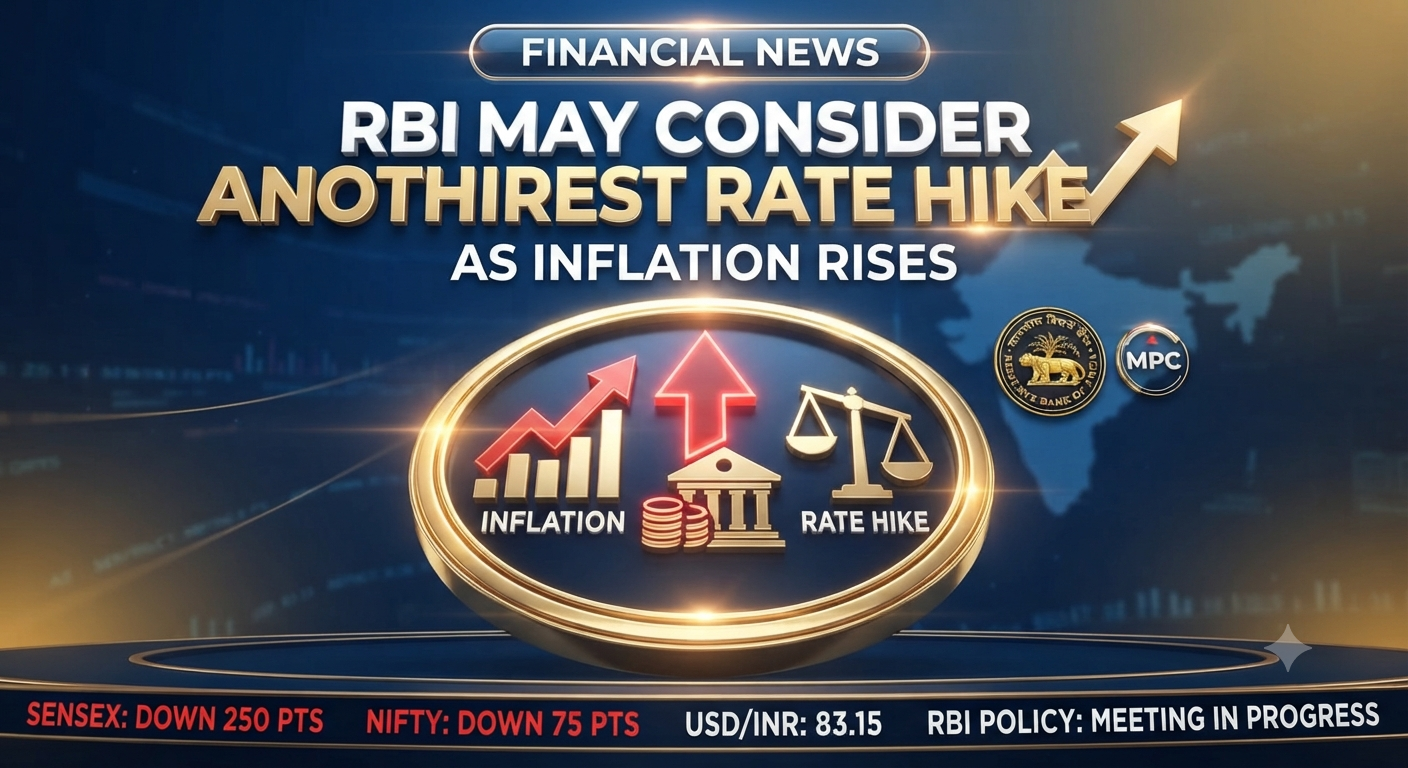
The Reserve Bank of India (RBI) is facing increasing pressure to tighten monetary policy as rising retail inflation and higher food prices create fresh concerns about price stability. With inflation moving above the central bank’s upper tolerance limit, economists and financial market participants are increasingly expecting another interest rate hike at the Monetary Policy Committee (MPC) meeting scheduled for December 2–4, 2026.
India’s retail inflation increased to 6.09% in October, compared with 5.54% in September. This marked the first time in two years that inflation had crossed the RBI’s upper tolerance threshold of 6% under the current consumer price index series.
The development has strengthened expectations of further monetary tightening. According to a Moneycontrol survey, all 14 economists polled expected the RBI to increase the benchmark repo rate by 25 basis points, taking it from 5.50% to 5.75%.
The possibility of another increase reflects growing concerns about food prices, weather-related supply disruptions and broader inflationary pressures across the economy.
Rising Food Prices Drive Inflation Higher
Food prices have emerged as one of the biggest contributors to India’s recent inflation increase.
Food inflation rose to 8.94% in October from 7.74% in September, putting additional pressure on household budgets. Prices of essential items, including onions, garlic and ginger, recorded significant increases.
Food and beverages account for a substantial share of India’s consumer price index, making changes in food prices particularly important for overall inflation.
The RBI’s November bulletin also highlighted that price pressures had become more widespread. Inflation increased across several goods and services categories and across multiple states and union territories.
This broader pattern is concerning because persistent price increases can become embedded in household and business expectations, making inflation more difficult to control.
For consumers, higher food prices reduce disposable income and limit spending on other goods and services. For businesses, rising input costs can increase operating expenses and create pressure on profit margins.
RBI Faces a Difficult Monetary Policy Decision
The RBI’s primary challenge is to maintain price stability without unnecessarily weakening economic growth.
The central bank increased its benchmark repo rate by 25 basis points to 5.50% in October, marking its first rate increase in nearly four years. The policy stance also shifted towards calibrated tightening, indicating that future decisions would depend on incoming economic and inflation data.
A further increase in December would represent another step towards controlling inflation.
According to the Reuters economist poll conducted in November, more than 90% of surveyed economists expected a 25-basis-point increase to 5.75%. Some market participants, however, have considered the possibility of a larger increase.
Money-market indicators have also reflected expectations of tighter monetary policy. Some investors have considered the possibility of a 50-basis-point increase, although the majority of economist forecasts favour a smaller adjustment.
The final decision will depend on the MPC’s assessment of inflation persistence, economic growth and financial conditions. <Cite refs={[“turn875928news19″,”turn875928search0″,”turn875928search1”]}/>
Higher Interest Rates Could Affect Borrowers
An increase in the repo rate can influence borrowing costs across the banking system.
Banks may gradually adjust lending rates in response to higher funding costs and changes in monetary policy. Borrowers with loans linked to external benchmark lending rates could experience higher interest expenses when their loan rates are reset.
Home loan borrowers, businesses relying on working capital and companies planning large investments may face additional financial pressure.
Higher borrowing costs can also influence consumer spending. Households paying more towards loan instalments may reduce discretionary purchases, while businesses may postpone expansion plans if financing becomes more expensive.
However, higher interest rates can also encourage savings and help moderate excessive demand, supporting the RBI’s efforts to bring inflation under control.
The challenge is to ensure that monetary tightening does not place unnecessary pressure on sectors that are already facing higher operating costs.
Global Energy Prices Add to Inflation Risks
International energy markets remain another important source of uncertainty for India’s inflation outlook.
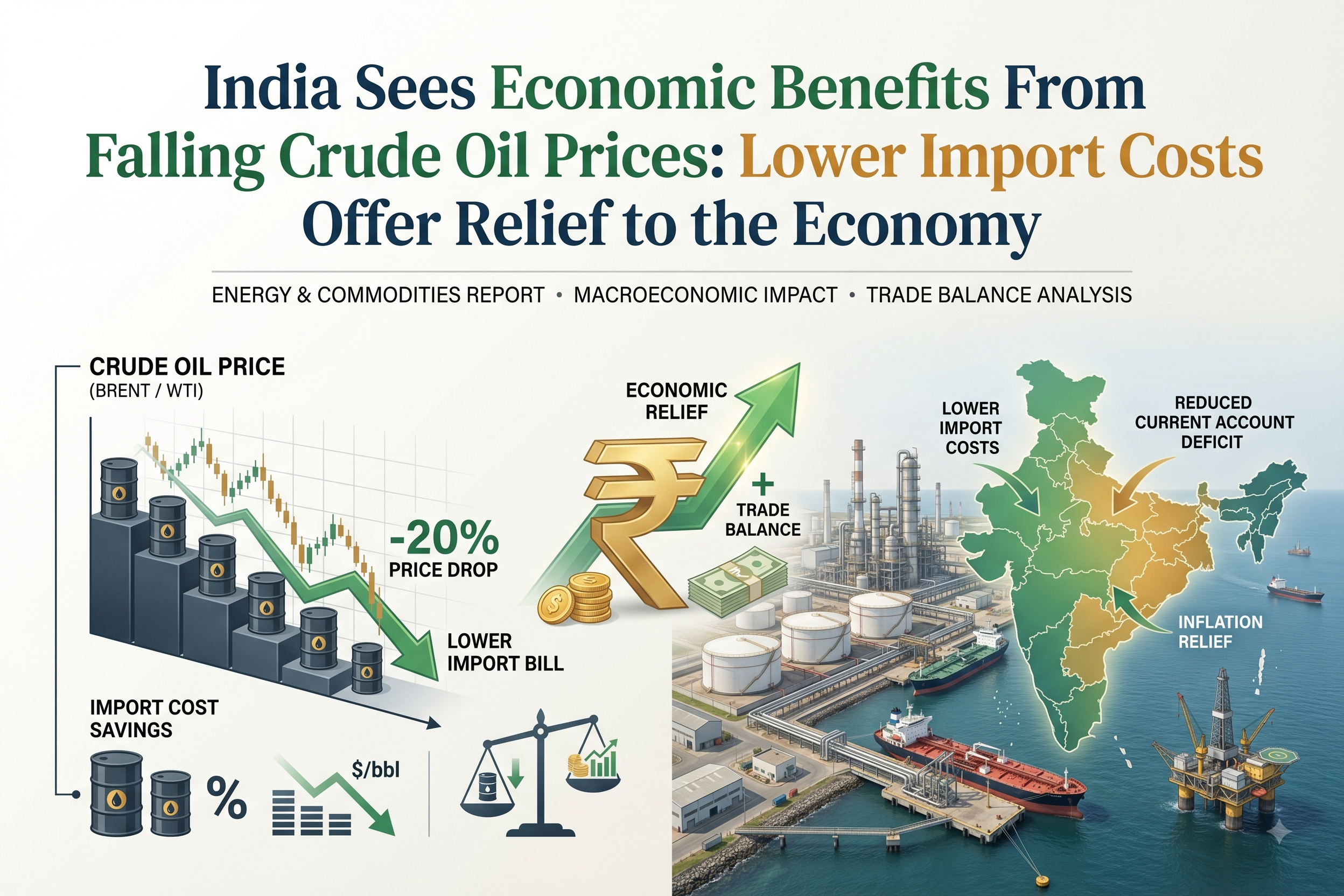
As a major importer of crude oil, India is sensitive to changes in global energy prices. Higher oil prices can increase transportation expenses, manufacturing costs and the country’s overall import bill.
Geopolitical tensions in the Middle East have raised concerns about possible supply disruptions, adding uncertainty to the international energy market.
If crude prices remain elevated, the resulting increase in fuel and transportation costs could create additional inflationary pressure.
However, changes in crude prices, currency movements and international supply conditions could also provide relief if energy costs moderate.
The RBI will need to consider these external developments when assessing the outlook for domestic inflation.
Economic Growth Must Remain a Priority
While controlling inflation is important, the RBI must also consider the impact of higher interest rates on India’s economic growth.
The Indian economy has maintained relatively strong momentum, supported by manufacturing activity, infrastructure investment, domestic consumption and services-sector expansion.
However, higher borrowing costs could affect private investment and consumer demand, particularly if inflation remains elevated for an extended period.
Businesses that depend on credit for machinery, infrastructure and working capital may become more cautious about new investments.
Similarly, households could postpone purchases of homes, vehicles and other expensive products if loan interest rates increase.
The RBI therefore faces the challenge of balancing inflation control with the need to maintain economic activity and financial stability.
Financial Markets Prepare for the December Policy Decision
Investors across equity, bond and currency markets are closely monitoring expectations surrounding the December policy meeting.
Government bond yields have reflected concerns about further monetary tightening, while money-market instruments have also indicated expectations of higher short-term interest rates.
For equity markets, a rate increase could create mixed effects. Banking stocks may respond differently depending on their deposit costs, lending margins and credit demand. Interest-rate-sensitive sectors such as real estate, automobiles and consumer durables could face pressure if borrowing costs increase.
The Indian rupee and foreign investment flows will also remain important considerations.
A credible commitment to controlling inflation could support long-term investor confidence, although higher interest rates may create short-term volatility across financial markets.
Outlook for India’s Monetary Policy
The December MPC meeting will be important in determining the RBI’s response to rising inflation.
Economists largely expect a 25-basis-point increase, although the possibility of a larger adjustment remains part of market discussions. The central bank will also evaluate whether food inflation is spreading into other categories and whether underlying price pressures are becoming more persistent.
Future monetary policy decisions will depend on inflation trends, economic growth, international crude oil prices, currency movements and domestic liquidity conditions.
If food prices begin to moderate and external inflationary pressures ease, the RBI may have greater flexibility in deciding the pace of future tightening.
However, sustained inflation above the central bank’s target range could require further action.
The Worldonomics Times View
The possibility of another RBI interest rate hike highlights the growing importance of inflation management in India’s current economic environment. Rising food prices and broader price pressures have created a difficult situation for policymakers, particularly as households continue to face higher living expenses.
The RBI must maintain credibility in its inflation-control framework while avoiding excessive pressure on economic growth. A measured and data-driven approach will be important in balancing these objectives.
For businesses and consumers, the prospect of higher borrowing costs makes financial planning increasingly important. Companies may need to manage debt carefully, while households should consider the potential impact of changing interest rates on loan repayments.
The December policy decision will provide an important indication of the RBI’s priorities for the coming months. Ultimately, sustainable economic growth will depend not only on strong investment and consumption but also on stable prices and a predictable monetary policy environment.