By Worldonomics Times | Global Economy
Date: October 27, 2026
Introduction
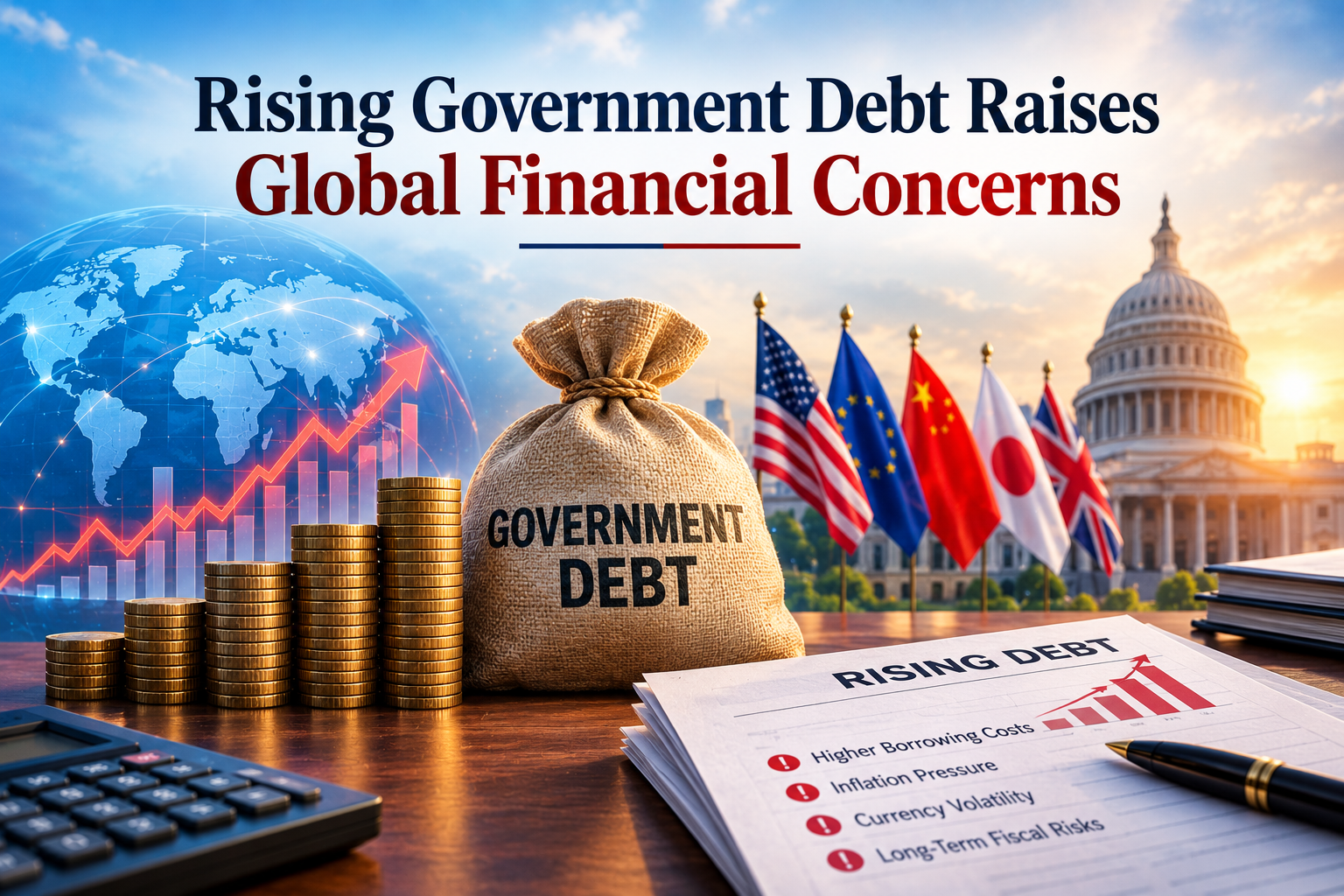
Rising government debt is becoming a major concern for the global economy as countries face increasing borrowing costs, expanding public expenditure and growing pressure on government budgets. From advanced economies to developing nations, governments are finding it increasingly difficult to balance essential public spending with the need to maintain sustainable debt levels.
According to the International Monetary Fund (IMF), global public debt is expected to exceed 100% of global gross domestic product (GDP) by 2030. Higher interest rates, geopolitical tensions, energy-price shocks and rising spending requirements are adding to fiscal pressures worldwide.
The growing debt burden is raising concerns about governments’ ability to finance infrastructure, healthcare, education and social welfare while maintaining financial stability. As borrowing requirements increase, policymakers face mounting pressure to introduce credible fiscal strategies and strengthen the resilience of public finances.
Global Public Debt Continues to Rise
Government borrowing increased significantly during recent global crises, as countries introduced emergency support measures, protected businesses and households, and financed economic recovery programmes. Although these measures helped cushion economic shocks, they also contributed to higher debt levels.
Today, governments face additional spending demands related to national security, ageing populations, climate adaptation, infrastructure development and energy security. In many countries, these commitments are increasing faster than public revenues.
The IMF’s April 2026 Fiscal Monitor reported that global public debt had reached nearly 94% of GDP in 2025 and projected that it could reach 100% by 2029 under prevailing fiscal trends.
High debt does not automatically indicate an economic crisis. Countries with strong institutions, reliable revenue systems and deep domestic financial markets can often manage substantial borrowing. However, persistent deficits and limited fiscal flexibility can leave governments more vulnerable when unexpected economic shocks occur.
Rising Borrowing Costs Put Pressure on Budgets
One of the most significant challenges associated with high public debt is the increasing cost of servicing it. When interest rates rise, governments may have to pay more to refinance maturing bonds and raise additional funds.
In an October 2026 analysis, the IMF reported that the average 10-year government bond yield across the Group of Seven advanced economies had increased by more than one percentage point between February and September, reaching its highest level in nearly two decades. The IMF also projected that the effective average cost of government financing could rise from 2.3% in 2021 to 3.7% by 2031.
Higher interest payments reduce the money available for public services and long-term investment. Governments may be forced to reconsider infrastructure projects, limit discretionary expenditure or increase revenues to meet their financial obligations.
The problem becomes more difficult when borrowing costs rise faster than economic growth. Under such conditions, stabilising the debt-to-GDP ratio may require governments to improve their budget balances through stronger revenues, more efficient spending or a combination of both.
Developing Economies Face Greater Challenges
The impact of rising government debt is particularly serious for low-income and developing economies. Many of these countries have narrower tax bases, greater dependence on external financing and more limited access to affordable long-term borrowing.
When international interest rates rise or investors become more cautious, borrowing costs for these economies can increase sharply. Currency depreciation may also make foreign-currency debt more expensive to repay, adding pressure to public finances.
The IMF’s October 2026 analysis found that interest payments in low-income countries consume more than 15% of tax revenues, compared with an average of around 9% between 2011 and 2019.
Such pressures can limit the resources available for poverty reduction, education, healthcare and essential infrastructure. Countries may also become more vulnerable to natural disasters, commodity-price volatility and disruptions in international financial markets.
Strengthening domestic revenue collection, improving public financial management and securing sustainable financing arrangements will be essential to reducing these vulnerabilities.
Financial Markets and Economic Stability at Risk
High public debt can affect financial markets as investors increasingly assess whether governments can manage their borrowing requirements over the long term. Concerns about fiscal sustainability may push government bond yields higher, increasing borrowing costs further.
This can create a difficult cycle: higher interest payments widen budget deficits, larger deficits require additional borrowing, and increased borrowing can place further pressure on bond markets.
Rising government yields can also influence private-sector financing. When government bonds offer higher returns, businesses may face more expensive borrowing, while falling bond prices can generate losses for banks, pension funds and other investors holding government securities.
The IMF has warned that elevated public debt and rising sovereign bond yields could amplify financial vulnerabilities, particularly when markets are already exposed to geopolitical uncertainty, inflation pressures and other sources of volatility.
Although these developments do not necessarily lead to a financial crisis, they underline the importance of credible fiscal policies and effective financial supervision.
The Need for Sustainable Fiscal Policies
Governments must take a balanced approach to reducing debt without undermining economic growth or essential public services. Abrupt spending cuts can weaken demand and disproportionately affect vulnerable households, while continued borrowing without a credible plan can increase long-term financial risks.
The IMF has emphasised the importance of realistic medium-term fiscal plans, stronger revenue systems and more efficient public expenditure. Governments should prioritise productive investment, review inefficient subsidies and improve the effectiveness of public programmes.
Targeted support for vulnerable households can also provide relief during periods of high living costs without placing unnecessary pressure on public budgets. Greater transparency, stronger debt management and independent fiscal oversight can further improve investor confidence.
International cooperation will remain important, particularly in helping financially vulnerable countries access sustainable financing and manage debt-related risks.
The Worldonomics Times View
Rising government debt is a growing test of economic leadership and fiscal responsibility. While borrowing can support development and protect economies during periods of crisis, prolonged deficits and increasing interest payments can restrict governments’ ability to respond to future challenges.
The priority should be to establish a sustainable balance between public spending, revenue generation and economic growth. Governments must protect essential services while directing resources towards productive investments that strengthen long-term economic capacity.
For developing economies, stronger tax systems, transparent public finances and responsible debt management will be particularly important. For advanced economies, credible medium-term fiscal plans can help restore confidence and limit the risk of borrowing costs rising further.
The Worldonomics Times believes that financial resilience depends not simply on reducing debt, but on ensuring that public borrowing supports lasting economic value. Timely reforms, responsible fiscal decisions and international cooperation will be crucial to safeguarding economic stability and creating a stronger financial foundation for future generations.