The hidden economics of e-commerce: How a simple product return can affect revenue, inventory, logistics and profitability
Ordering a product online takes just a few clicks. Returning it can be almost as easy.
A customer orders two sizes of a dress, keeps one and sends the other back. Another customer receives a product that looks different from its online photograph and requests a refund.
For consumers, this is convenience. For businesses, however, every return can trigger a chain of costs that goes far beyond refunding the purchase price.
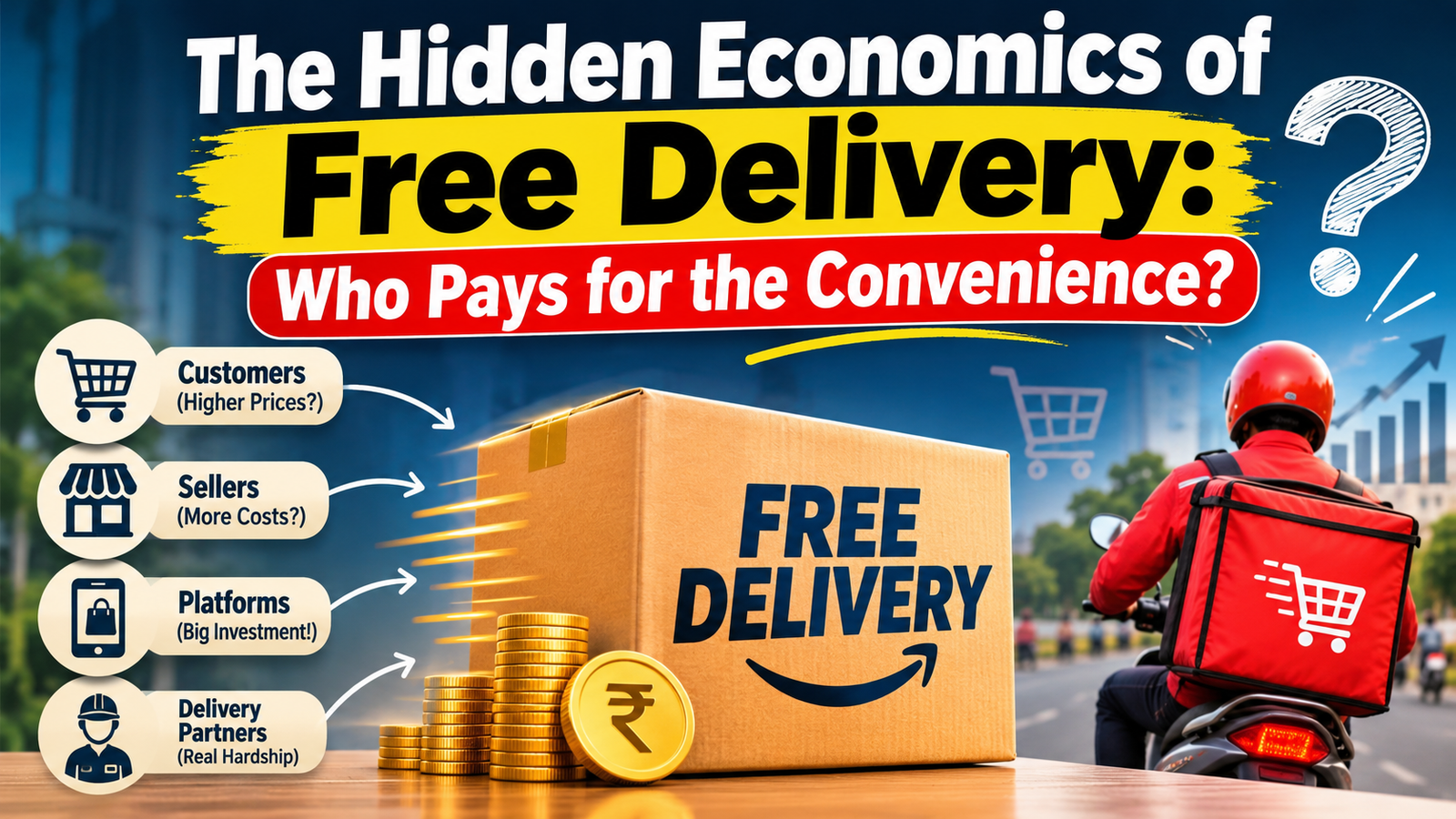
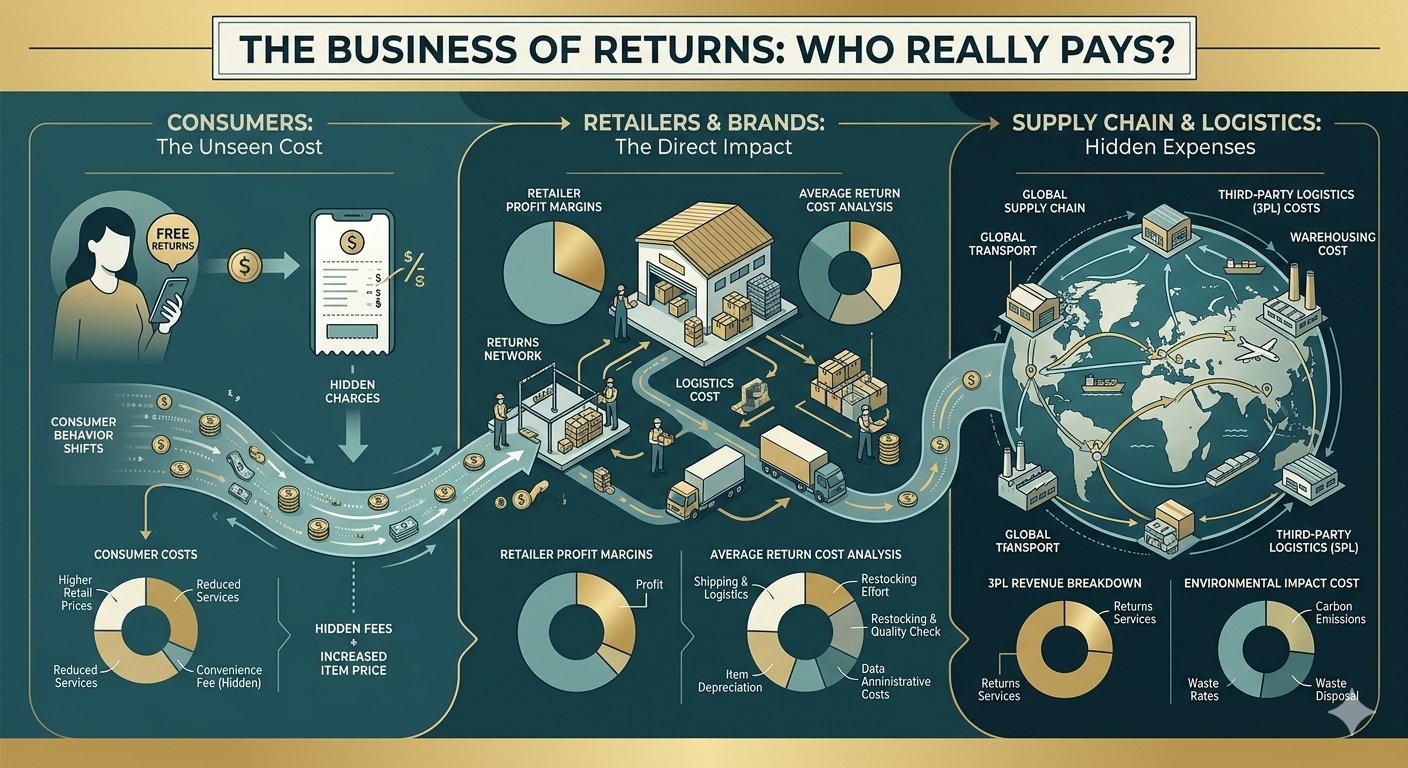
In the competitive world of e-commerce, free returns have become an important customer-experience strategy. But an important question remains: When customers return products for free, who actually bears the cost?
The hidden journey of a returned product
A product’s journey does not necessarily end when it reaches the customer. Sometimes, it begins another journey in the opposite direction.
This process is known as reverse logistics.
It may involve:
- Collecting the returned product from the customer.
- Transportation back to a warehouse or seller.
- Inspection and quality verification.
- Repackaging, repair or refurbishment.
- Restocking or selling through another channel.
- Disposal or recycling if the product cannot be resold.
Each stage requires time, labour, infrastructure and money.
For certain products, particularly fashion and footwear, the returned item may also lose its selling opportunity if the season or trend changes before it reaches the warehouse.
Why free returns are not really free
Free returns are not necessarily free for the business.
The cost may be absorbed through several channels:
1. Logistics expenses
Businesses may have to pay for reverse transportation, collection and warehouse handling.
2. Inventory carrying costs
Returned products can remain unavailable for sale while they are being transported, inspected or processed. This can increase inventory holding costs.
3. Loss of product value
Products may be damaged, opened, used or become outdated before they can be resold.
4. Refund and payment processing
Refund administration and payment processing create additional operational work.
5. Customer acquisition costs
If a business has already spent money on advertising to acquire a customer, a returned order may leave it with marketing expenditure but no completed sale.
India’s e-commerce market: The challenge is growing
The scale of the issue becomes clearer when we examine consumer behaviour.
According to DHL’s 2025 India E-Commerce Trends Report, 69% of surveyed Indian shoppers said they mainly buy from online retailers offering free returns. The report also found that 83% had returned an item purchased online.
These findings highlight an important commercial reality: return policies influence where consumers choose to shop.
However, businesses must balance customer convenience with the financial sustainability of their operations.
An Economic Times report published in May 2026 highlighted another important challenge: Return-to-Origin (RTO) shipments, where an order never reaches the customer, can be a particularly significant source of e-commerce margin pressure in India.
It is important to distinguish between the two:
- Customer return: The product is delivered, accepted and subsequently returned.
- Return to Origin: The shipment goes back to the seller because delivery fails or the customer refuses to accept it.
Both create logistics costs, but their causes and solutions are different.
The profitability question: A simple illustration
Consider an online retailer selling a product for ₹2,000.
Assume the following illustrative figures:
| Particulars | Amount |
|---|---|
| Selling price | ₹2,000 |
| Product cost | ₹1,100 |
| Forward delivery and handling | ₹100 |
| Marketing and acquisition cost | ₹200 |
| Initial contribution | ₹600 |
Now suppose the customer returns the product.
The retailer may incur an additional ₹150 in reverse logistics and ₹50 in inspection and repackaging.
If the product can be resold without any loss in value, the retailer may recover most of the product cost. However, the additional ₹200 return-related expense reduces the original contribution from ₹600 to ₹400, assuming the other costs remain unchanged.
If the product is damaged or cannot be resold, the financial impact could be substantially higher.
Note: This is an illustrative example, not an industry-average cost calculation. Actual costs vary by product, seller, logistics arrangement and return reason.
Can technology reduce the cost of returns?
Businesses are increasingly looking beyond simply processing returned products. They are trying to prevent avoidable returns in the first place.
Some important approaches include:
- Better product descriptions: Accurate photographs, dimensions and specifications help customers make informed purchases.
- AI-powered recommendations: Size and fit recommendations can reduce avoidable apparel returns.
- Customer behaviour analysis: Identifying unusual return patterns can help businesses manage potential misuse.
- Quality control: Better packaging and product inspections can reduce damage-related returns.
- Predictive logistics: Data-driven planning can improve collection routes and inventory recovery.
The objective should not be to make returns unnecessarily difficult. It should be to make the entire process more efficient.
The environmental cost of returning products
There is another dimension that businesses cannot ignore.
Every unnecessary return may involve additional transportation, packaging and handling. Products that cannot be resold may eventually require disposal or recycling.
This means that return management is also connected to sustainability.
Reducing avoidable returns can help businesses protect margins while limiting unnecessary resource consumption and logistics activity.
What does this mean for businesses?
The future of e-commerce will not be determined only by how quickly a company delivers a product. Its ability to manage what happens after delivery will matter just as much.
Businesses need to measure return rates, identify the reasons behind returns, analyse category-wise costs and understand the financial impact of reverse logistics.
For finance professionals and Cost Accountants, this creates an interesting opportunity: to move beyond recording logistics expenses and analyse the actual cost of serving customers.
The real measure of an e-commerce sale is not simply how many orders a business receives, but how many orders it successfully fulfils profitably.
Free returns may attract customers, but efficient return management is what can help businesses retain profitability.