Why India’s growth resilience is being tested by rising prices, expensive crude oil and a changing monetary policy environment.
~ CMA Bishnu Seth
There is an interesting contrast in the Indian economy at the moment. While several major economies are struggling to maintain their growth momentum, India continues to attract positive attention from global institutions. Industrial activity is gaining strength, exports are expanding and domestic demand remains relatively supportive.
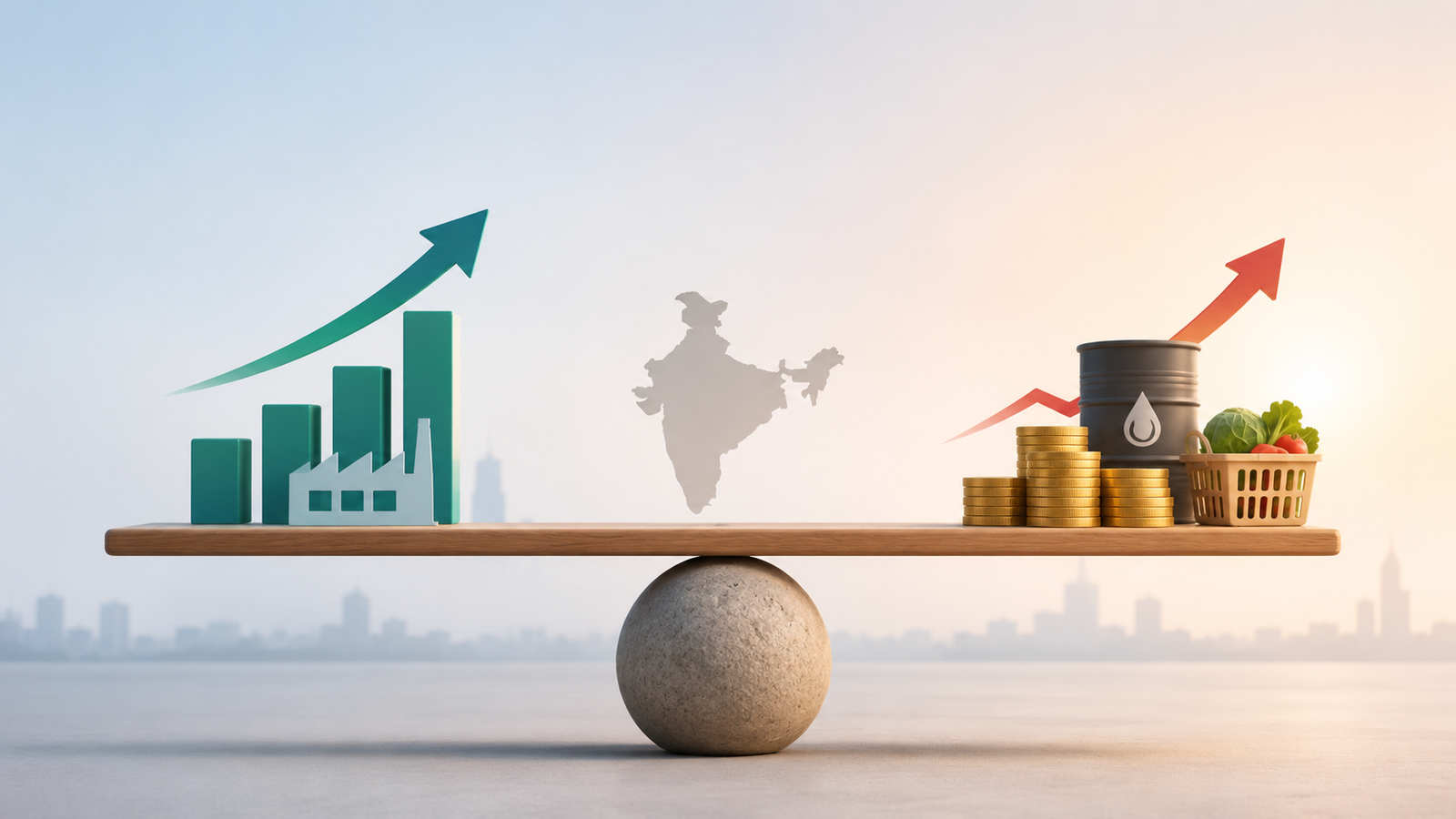
Yet, beneath these encouraging indicators, a different story is beginning to emerge. Inflation is rising, crude oil is becoming increasingly expensive and monetary policy is moving in a more cautious direction.
October 2026 captures this contrast particularly well. India’s growth story remains strong, but sustaining that momentum may prove more challenging than the headline projections suggest.
The latest assessments from the International Monetary Fund (IMF), Ministry of Finance, and other institutions provide an opportunity to look beyond individual economic indicators and understand the forces shaping India’s economic outlook.
1. India’s Growth Outlook: A Bright Spot in an Uncertain Global Economy
The IMF’s October 2026 World Economic Outlook revised India’s FY27 growth forecast upwards to 7.0%, from its earlier projection of 6.4%. The outlook for FY28 is equally encouraging, with growth also projected at 7.0%.
The contrast with the global economy is significant. The IMF expects global growth to reach just 3.1% in 2026, placing India well ahead of the broader trend.
The optimism is not limited to the IMF. The World Bank, OECD and Reserve Bank of India have also projected India’s FY27 growth at 7.1%.
There are reasonable grounds for this confidence. Domestic demand remains supportive, services activity continues to expand and industrial production has shown encouraging signs. The Ministry of Finance’s October Monthly Economic Review estimates real GDP growth at 7.35% for Q2 FY27 through its nowcasting model, following 7.8% in the previous quarter.
These projections underline the resilience of the Indian economy. However, a favourable growth forecast should not be confused with an absence of risks. The more important question is whether the economy can sustain this momentum if global conditions become less favourable.
2. Industrial Activity: Manufacturing Shows Signs of Strength
One of the more encouraging developments in October’s economic picture is the improvement in industrial activity.
India’s manufacturing PMI rose to 55.1 in September from 52.8 in August, while the services PMI increased to 55.2 from 54.1. Both indicators remain comfortably above the 50-point threshold, signalling expansion.
Industrial production has also strengthened. The Index of Industrial Production (IIP) grew by 8.0% in August, compared with 7.4% in July. Manufacturing output recorded an even stronger growth of 9.0%.
These figures matter because industrial expansion has implications well beyond factory production. It generates demand for raw materials, logistics, energy, financial services and skilled labour. When manufacturing activity improves, the benefits can gradually extend across the wider economy.
There is also an encouraging investment signal. The Annual Survey of Industries 2024-25 reported growth of 10.54% in fixed capital and 9.59% in gross value added in the registered manufacturing sector.
However, it would be premature to interpret a single month’s improvement as the beginning of a sustained industrial acceleration. The average manufacturing and services PMI readings for Q2 were lower than those in Q1.
September’s improvement is encouraging, but the coming quarters will reveal whether businesses are genuinely entering a stronger investment and expansion cycle.
3. Inflation: The Growing Pressure Behind the Growth Numbers
If growth is the most encouraging part of October’s economic picture, inflation is arguably the most concerning.
Retail inflation increased to 5.54% in September from 4.8% in August. Food inflation rose to 7.74%, putting renewed pressure on household budgets.
For households, inflation is not an abstract economic concept. It is reflected in the monthly grocery bill, transportation expenses and the rising cost of everyday necessities. Even when overall economic growth remains strong, persistent price increases can affect purchasing power and consumer confidence.
But the concern extends beyond food prices.
Wholesale inflation climbed to 11.4% in September, compared with 9.9% in August. The increase was broad-based, with food, fuel, power and manufactured products all contributing to the pressure. Manufactured-product inflation reached 9.8%, while fuel and power inflation increased to 25.9%.
This deserves particular attention. When manufacturers face higher input costs, they have limited choices: absorb the additional expense and accept lower margins, improve operational efficiency, or pass some of the increase on to customers.
Not every business has the pricing power to do so. Smaller manufacturers, in particular, may find it difficult to protect their margins while competing in price-sensitive markets.
This is why wholesale inflation deserves attention alongside retail inflation. While CPI reflects the prices consumers face, WPI offers a useful indication of cost pressures building up across the production and wholesale economy.
Interestingly, the Ministry of Finance’s review notes that approximately 64% of the CPI basket continues to record inflation below the RBI’s 4% target. This indicates that inflationary pressure is not uniform across all consumer items. Nevertheless, the simultaneous rise in retail and wholesale prices makes the situation more complicated.
The key question is whether these pressures will ease or gradually become embedded in the broader price structure.
4. RBI’s Policy Dilemma: Controlling Inflation Without Slowing Growth
The RBI’s October monetary policy decision reflects the growing concern around inflation.
The Monetary Policy Committee unanimously increased the repo rate by 25 basis points, taking it from 5.25% to 5.50%. It also shifted its policy stance from neutral to calibrated tightening.
This is an important change in direction.
When inflation becomes persistent, a central bank cannot simply assume that prices will eventually settle down. It must also consider whether rising costs could influence wages, business pricing decisions and future inflation expectations.
A higher repo rate can help moderate demand-side inflationary pressures by making borrowing more expensive. However, monetary policy has its limitations. It cannot directly resolve agricultural supply shortages or reduce the international price of crude oil.
This is where the RBI’s challenge becomes particularly difficult. Tightening monetary policy too aggressively could affect investment and consumption, while being too cautious could allow inflationary pressures to become more persistent.
For households with loans and businesses dependent on credit, the policy shift is also a reminder that the interest-rate environment may remain less supportive than before.
The RBI must therefore strike a careful balance: contain inflation without unnecessarily weakening the economic activity that has supported India’s growth.
5. Crude Oil: The External Risk India Cannot Afford to Ignore
Among the various risks facing the Indian economy, crude oil deserves special attention.
India’s dependence on imported energy means that developments in international oil markets have consequences far beyond the petroleum sector.
According to EY’s October Economy Watch, the composite average crude oil price, based on Brent, WTI and Dubai Fateh, reached US$102.3 per barrel in September. Brent crude subsequently touched approximately US$117 per barrel on 23 October as tensions in the Middle East intensified.
For India, expensive crude can create pressure on several fronts simultaneously. It increases the import bill, raises transportation and manufacturing costs, and can contribute to imported inflation. It can also put pressure on the current account and the domestic currency.
The RBI’s sensitivity analysis provides an indication of the potential impact. If crude oil prices remain 10% above its baseline assumption, with full pass-through to domestic prices, inflation could rise by approximately 50 basis points while economic growth could decline by around 15 basis points.
This is precisely the kind of situation policymakers would prefer to avoid: an external shock that pushes prices higher while simultaneously weakening economic activity.
The development also reinforces the importance of energy diversification. For a large energy-importing economy such as India, reducing vulnerability to international supply disruptions is not merely an environmental or strategic objective; it is an economic necessity.
6. Government Finances: Capital Spending Remains Strong, but Fiscal Space Matters
While the RBI is becoming more cautious, government capital expenditure continues to support economic activity.
During April-August FY27, central government capital expenditure increased by 18.2% year-on-year, while total government expenditure grew by 10.5%.
This investment matters because infrastructure spending creates demand across multiple sectors. Roads, railways, energy infrastructure and other public projects generate business for construction companies, engineering firms, cement and steel manufacturers, and logistics providers.
However, the revenue side of government finances presents a different picture.
Gross tax revenue grew by 6.5% during the first five months of FY27. Direct taxes performed relatively well, increasing by 13.4%, but indirect taxes contracted by 2.7%.
The contraction in indirect taxes was partly influenced by the discontinuation of the GST compensation cess and reductions in special additional excise duties on petrol and diesel.
At the same time, major subsidies increased by 24.4%, reflecting, among other factors, the pressures arising from global commodity prices.
The fiscal deficit stood at 41.9% of its annual budget estimate, while the revenue deficit reached 46.5%.
These figures do not necessarily point to an immediate fiscal problem. However, they highlight an important policy consideration: the government needs to sustain productive investment without allowing revenue and subsidy pressures to unnecessarily restrict its future spending capacity.
At a time when private businesses are also dealing with higher input costs and tighter credit conditions, the quality of public expenditure becomes particularly important. Sustained investment in productive infrastructure can support long-term growth, but maintaining fiscal discipline remains equally essential.
7. External Trade: Export Momentum Is Encouraging, but the Trade Deficit Persists
India’s export performance in September offers another encouraging development.
Merchandise exports increased by 23.1% year-on-year to US$44.4 billion. Electronics and engineering goods were among the major contributors.
Electronic goods exports reached US$5.3 billion, recording growth of 70.5% over the corresponding month last year.
This is particularly encouraging for India’s manufacturing ambitions. The growth in electronics exports suggests that domestic manufacturing capabilities are gaining traction in an important segment of global trade.
However, export growth does not automatically translate into an improved trade balance.
Merchandise imports also increased, reaching US$74.6 billion. Consequently, the merchandise trade deficit stood at US$30.2 billion in September.
The broader picture is somewhat more reassuring. Including services, total exports reached US$80.8 billion, while total imports stood at US$94.1 billion. The overall trade deficit consequently narrowed to US$13.3 billion from US$14.2 billion a year earlier.
This highlights the importance of India’s services sector. Its export surplus continues to provide valuable support to the country’s external balance.
India’s foreign exchange reserves stood at approximately US$721 billion as of 16 October 2026, providing an important buffer against external volatility.
Nevertheless, the moderation in net FDI and FPI inflows during August is worth monitoring. In a world where international capital can move quickly in response to interest-rate differentials and geopolitical developments, maintaining investor confidence is essential.
The longer-term opportunity lies in making Indian exports more competitive, diversifying trade destinations and increasing domestic value addition rather than relying solely on higher export volumes.
8. The Road Ahead: Can India Sustain Its Growth Momentum?
October’s economic developments leave us with a contrasting picture.
India has a strong growth outlook, improving industrial activity and encouraging export performance. Domestic demand and the services sector continue to provide support at a time when the global economy is facing considerable uncertainty.
But the challenges are equally real. Inflation has accelerated, crude oil prices remain volatile, the RBI has moved towards monetary tightening and government finances face competing expenditure priorities.
None of these developments independently changes India’s long-term growth potential. However, their combined impact will influence the pace and quality of economic expansion over the coming months.
Three developments deserve particular attention as FY27 progresses.
First, the trajectory of food and energy prices will influence the RBI’s policy decisions and the cost of borrowing across the economy.
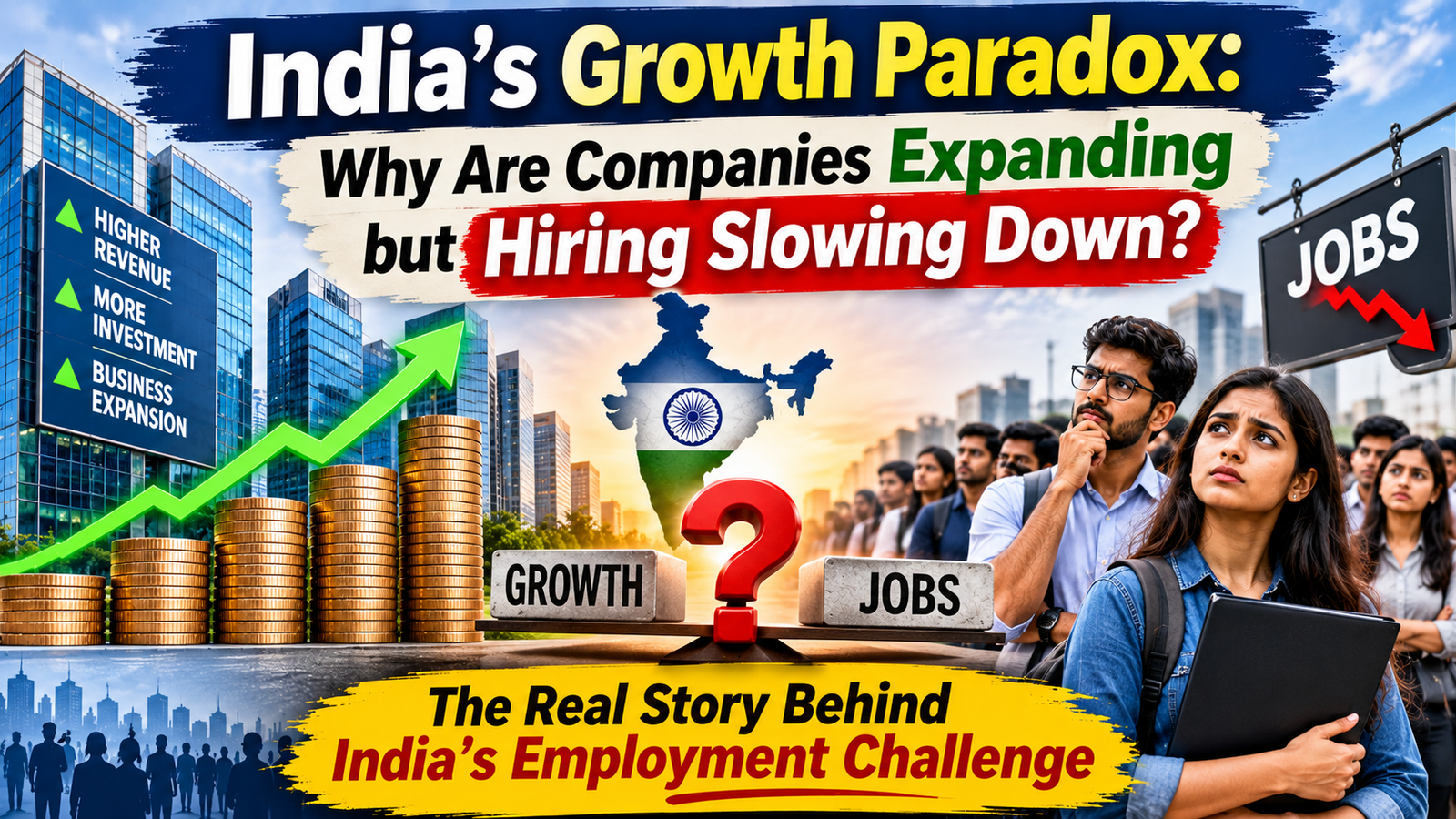
Second, the sustainability of industrial investment and employment generation will determine whether strong headline growth translates into broader economic opportunity.
Third, India’s ability to strengthen export competitiveness and reduce external vulnerabilities will be important in protecting the economy against global shocks.
India’s economic story remains promising. But growth is not simply about achieving a higher number in the GDP forecast. It is also about ensuring that households can manage rising costs, businesses can invest with confidence and public finances remain capable of supporting long-term development.
Ultimately, the strength of an economy is not measured only by how quickly it grows in favourable conditions. It is measured by how effectively it responds when those conditions begin to change.
October 2026 offers a timely reminder: India’s growth momentum is strong, but preserving it will require careful economic management.