Financial reporting has always been the backbone of business decision-making. From balance sheets and profit and loss statements to cash flow statements and management reports, financial information helps businesses understand their performance, assess risks and plan for the future.
But what happens when Artificial Intelligence begins transforming the way this information is collected, processed, analysed and presented?
The accounting profession is entering a new era — one where technology is no longer just supporting financial reporting but actively reshaping it.
From Traditional Reporting to Intelligent Reporting
Traditionally, financial reporting has involved extensive manual work, including recording transactions, reconciling accounts, verifying figures, preparing financial statements and analysing variances.
These processes can be time-consuming and vulnerable to human error.
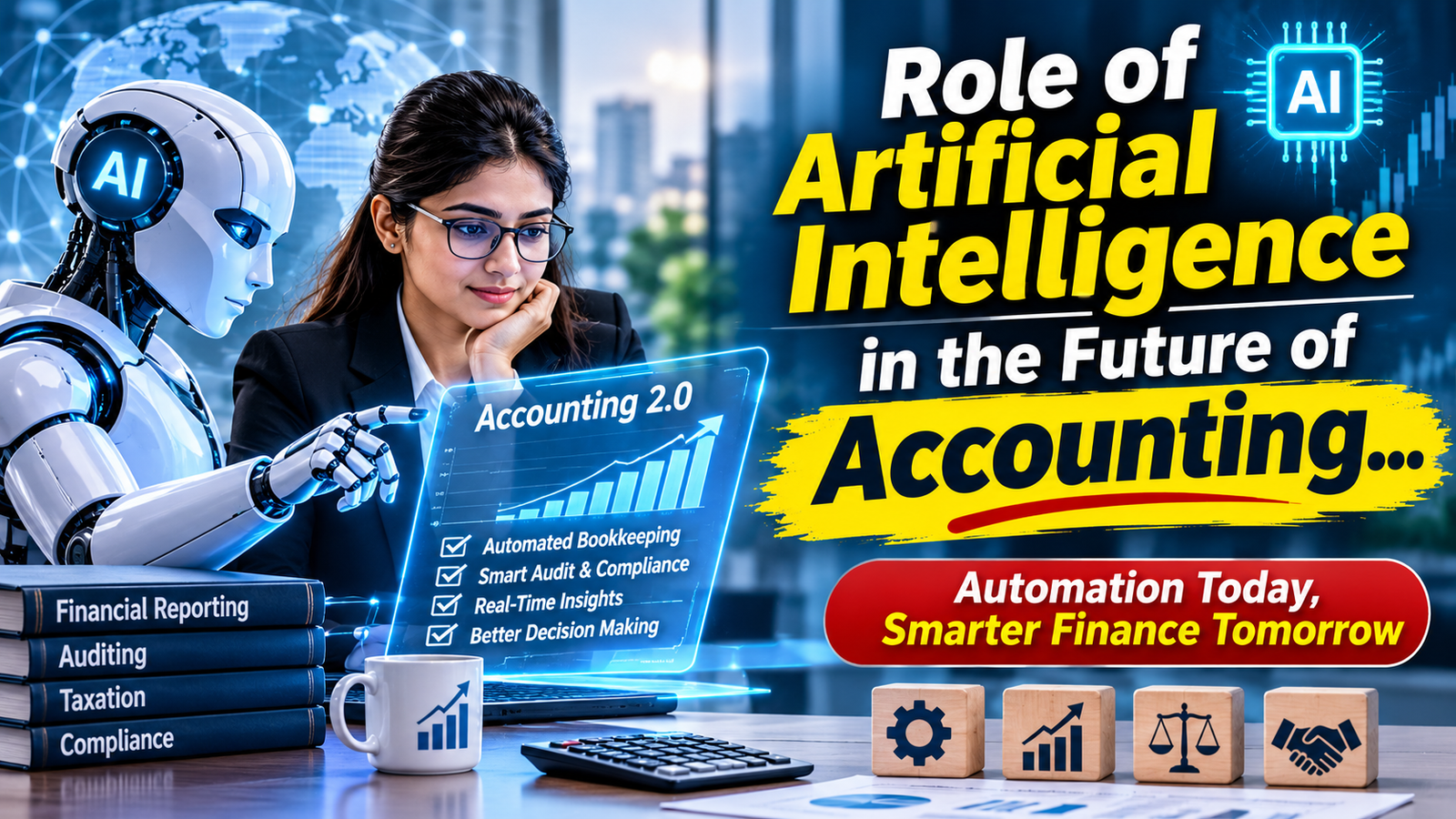
AI-powered tools are changing this landscape by enabling businesses to:
- Automate routine accounting entries and reconciliations.
- Identify unusual transactions and potential financial irregularities.
- Analyse large volumes of financial data in less time.
- Generate preliminary financial reports and management summaries.
- Support forecasting and financial planning through predictive analytics.
The result is an opportunity to make financial reporting faster, more efficient and increasingly data-driven.
Real-Time Financial Reporting: The Next Big Shift
One of the most significant changes AI can bring is the movement from periodic reporting towards more continuous financial monitoring.
Businesses traditionally rely on monthly, quarterly or annual reports to evaluate performance.
With integrated financial systems and AI-powered analytics, organisations can increasingly monitor revenue, expenses, cash flows and financial risks throughout the year.
This can help management identify financial challenges earlier and make timely decisions rather than waiting for the end of a reporting period.
For businesses operating in competitive markets, timely financial information can become a significant advantage.
Can AI Improve Accuracy and Transparency?
AI can assist in identifying inconsistencies, unusual patterns and potential errors that might otherwise go unnoticed.
It can also support audit procedures by helping professionals analyse extensive datasets and identify transactions that require further investigation.
However, AI-generated information is not automatically accurate.
Poor-quality data, incorrect assumptions, algorithmic limitations and inadequate human supervision can produce misleading results.
Therefore, professional verification, internal controls and accountability remain essential.
Will AI Replace Accountants?
This is perhaps the most frequently discussed question surrounding the future of accounting.
The answer requires a broader perspective.
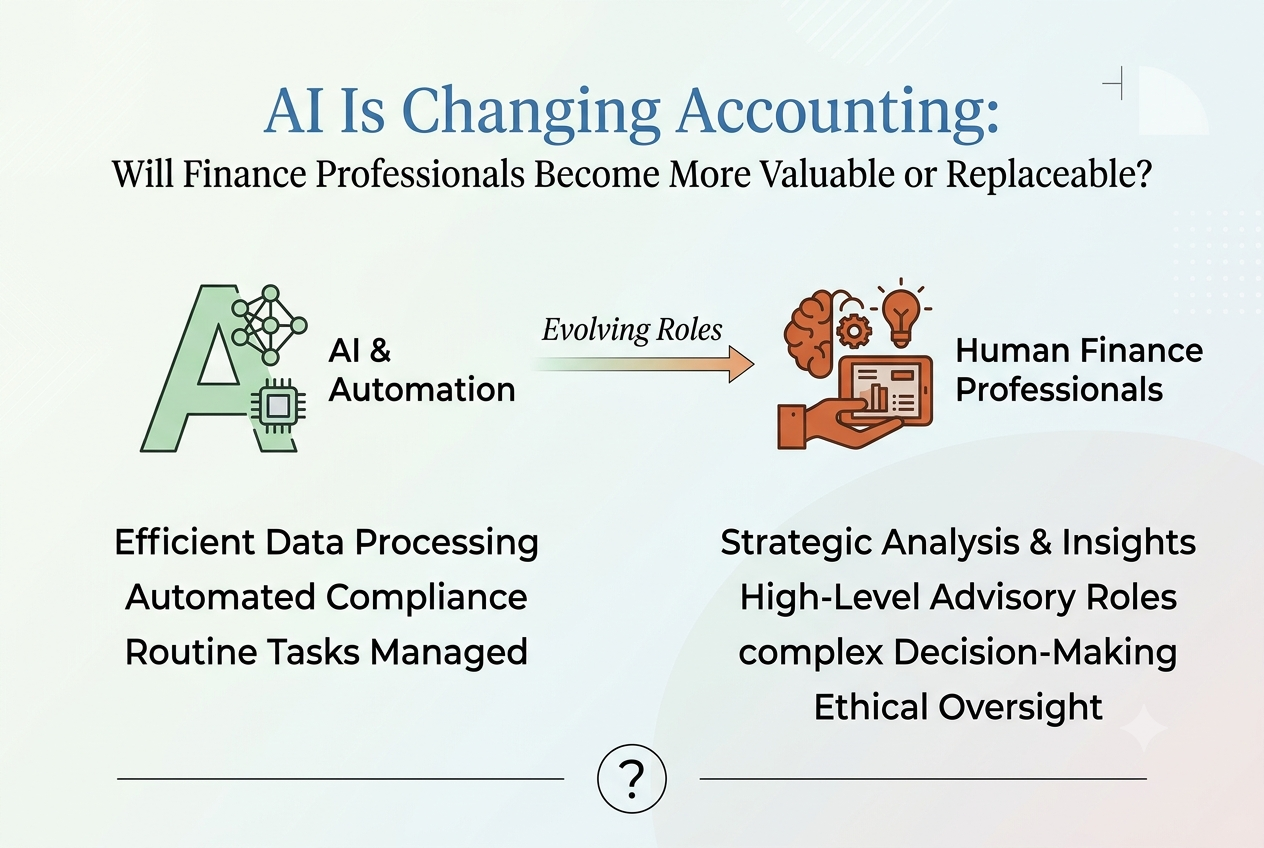
AI may automate several repetitive accounting activities, but financial reporting involves much more than processing numbers.
It requires professional judgement, interpretation of accounting standards, understanding of business transactions, regulatory compliance and ethical responsibility.
An AI system may identify an unusual financial transaction, but determining its commercial substance and accounting treatment may require professional expertise.
The role of accountants is therefore likely to evolve from performing repetitive tasks towards analysing information, evaluating risks and supporting strategic business decisions.
What Should Future Finance Professionals Learn?
To remain relevant in this changing environment, finance professionals must develop skills beyond traditional accounting knowledge.
Some important areas include:
- Understanding AI-powered accounting and reporting tools.
- Developing data analytics and technology skills.
- Strengthening knowledge of accounting standards and financial regulations.
- Improving analytical thinking and professional judgement.
- Understanding cybersecurity, data privacy and technology-related risks.
The future will favour professionals who can combine accounting expertise with technological understanding.
The Road Ahead
AI is not changing the fundamental purpose of financial reporting. Businesses will still need reliable, transparent and compliant financial information.
What is changing is the way that information is generated, analysed and used.
The real opportunity lies in combining the efficiency of technology with the judgement and accountability of human professionals.
The future accountant may spend less time preparing numbers and more time explaining what those numbers mean for the business.
And perhaps that is the biggest transformation AI will bring to the accounting profession.
In the age of Artificial Intelligence, the value of an accountant will not be determined merely by the ability to process financial data, but by the ability to interpret it, question it and turn it into meaningful decisions.