The US dollar remained broadly stable on Wednesday as global currency markets awaited crucial economic indicators that could influence the Federal Reserve’s monetary policy decision in December. Investors are closely monitoring the latest US third-quarter Gross Domestic Product (GDP) figures and October inflation data to assess the strength of the world’s largest economy and determine the likely direction of interest rates.
The dollar’s pause follows a strong performance during November, with traders reassessing their positions ahead of a series of important economic releases. The latest figures are expected to provide fresh insight into inflationary pressures, consumer spending and overall economic growth.
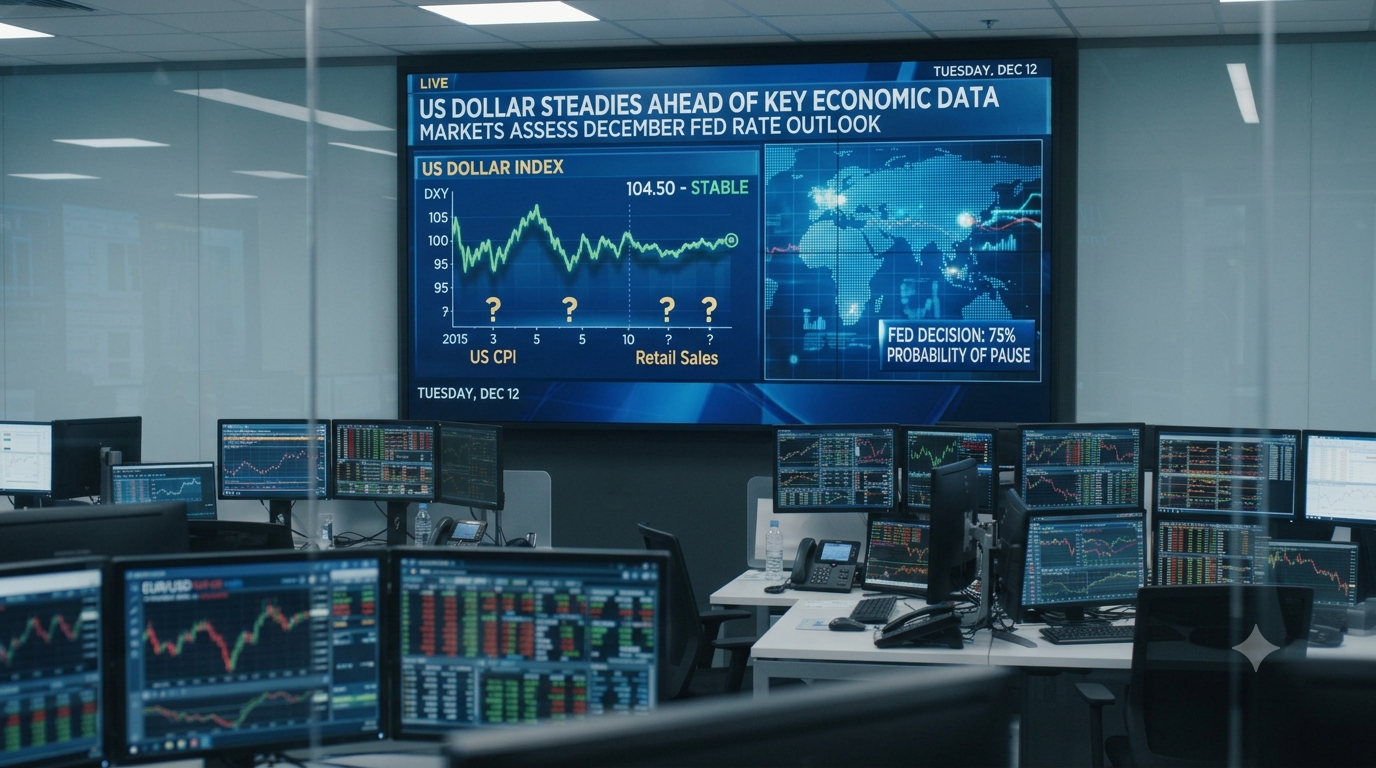
The US Dollar Index, which measures the greenback against a basket of six major currencies, was broadly unchanged at around 103.85 on Wednesday after declining 0.44% in the previous session. The euro, Japanese yen and British pound also recorded relatively limited movements against the US currency.
Investors Await US GDP and Inflation Figures
The immediate focus for currency markets is the second estimate of US economic growth for the third quarter of 2026.
Market expectations indicate that the US economy may have expanded at an annualised rate of approximately 3.5% during the July–September quarter. The figure will provide an updated assessment of economic performance following the initial estimate of 3.4% growth.
A stronger-than-expected reading could reinforce confidence in the resilience of the US economy and influence expectations about the Federal Reserve’s ability to maintain or increase borrowing costs. Conversely, weaker growth could raise concerns about the impact of tighter monetary conditions on economic activity.
Inflation data are equally important. Investors are awaiting the October Personal Consumption Expenditures (PCE) Price Index, which is the Federal Reserve’s preferred measure of inflation.
Economists expect monthly PCE inflation to increase by approximately 0.3% in October, compared with a 0.5% rise in September. The core PCE measure, which excludes food and energy prices, will also receive close attention because it provides an indication of underlying inflation trends.
Persistent inflation could strengthen the case for further monetary tightening, while signs of easing price pressures may create greater uncertainty about the scale and timing of future rate increases.
Federal Reserve Policy in Focus
The December Federal Open Market Committee (FOMC) meeting is emerging as a major event for global financial markets.
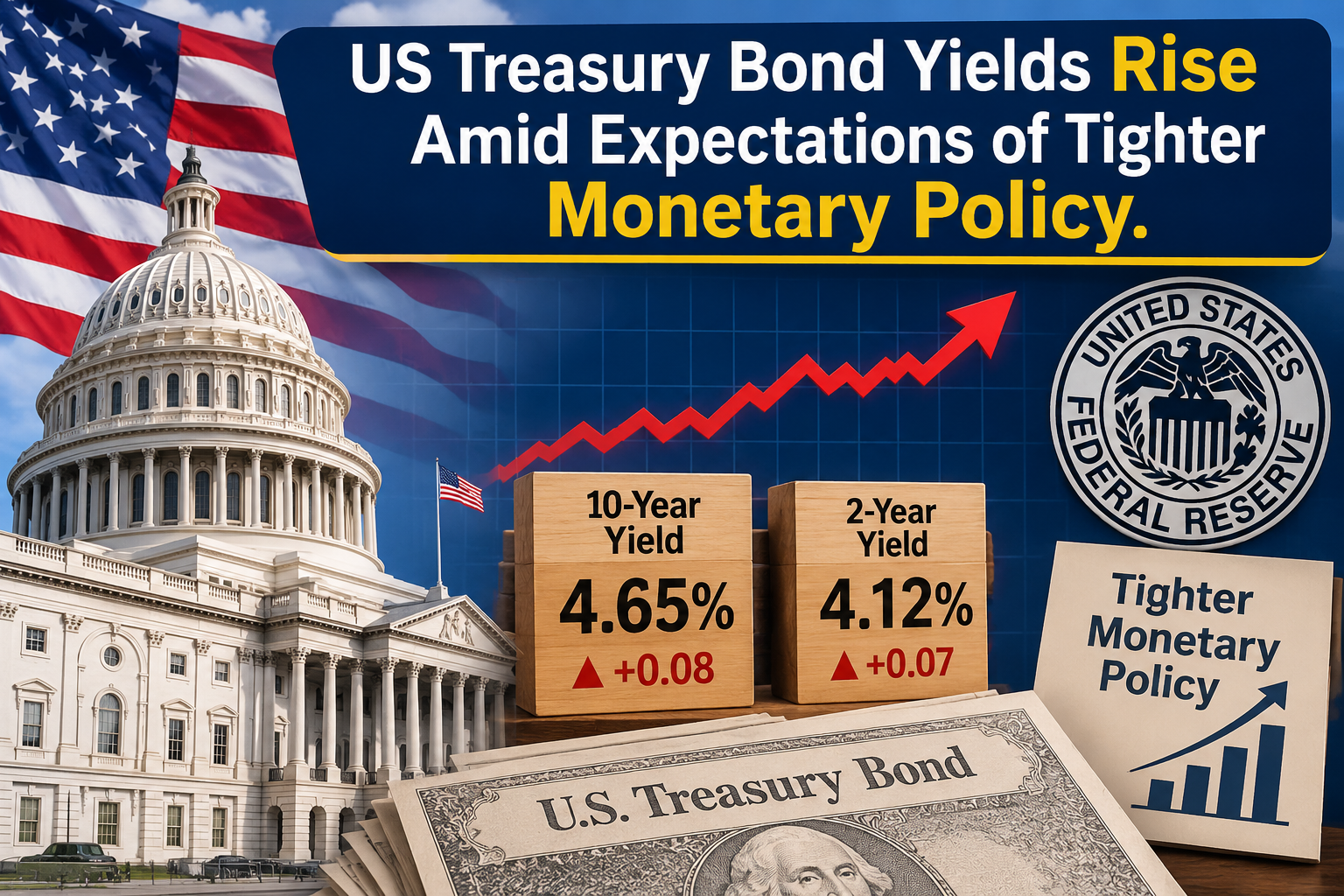
Recent Federal Reserve communications and economic developments have kept expectations of another interest-rate increase elevated. According to market pricing reported on Wednesday, traders were assigning approximately a 97% probability to a rate hike at the December meeting, with expectations also pointing towards the possibility of another increase in January.
The Federal Reserve has been balancing the need to control inflation against the risk that higher borrowing costs could weaken economic growth. Its policy decisions influence interest rates across financial markets, affecting government bonds, corporate borrowing, mortgage costs and currency valuations.
The minutes of the October FOMC meeting indicated that policymakers remained concerned about inflation and were considering further increases in interest rates. However, differences in views over the pace and scale of tightening highlight the uncertainty surrounding the central bank’s next steps.
Global Currency Markets Show Mixed Movements
While the US dollar remained steady, other major currencies experienced movements influenced by domestic economic developments and changing monetary policy expectations.
The Japanese yen traded near 159.28 per US dollar. Recent Japanese data showed that service-sector prices increased 4.2% year-on-year in October, marking their highest growth in 36 years. The development has strengthened expectations that the Bank of Japan could consider further monetary tightening.
The Australian dollar gained around 0.29% against the greenback, reaching approximately $0.6657 after inflation data for October came in above market expectations. Persistent underlying price pressures have reinforced expectations that Australian monetary policy may remain restrictive.
The euro was little changed near $1.0961, while the British pound edged lower to approximately $1.3106. These movements reflect the influence of domestic inflation, interest-rate expectations and broader global financial conditions.
Economic Uncertainty and Investor Sentiment
Beyond inflation and interest rates, investors are also assessing developments in global equity markets and the technology sector.
Recent concerns about the sustainability of investment linked to artificial intelligence have affected market sentiment. Technology stocks have attracted substantial capital, but questions about valuations, financing requirements and future profitability have contributed to periods of volatility.
Such developments can influence currency markets through changes in investment flows and demand for safe-haven assets. The dollar’s recent strength has reflected, in part, expectations of relatively higher US interest rates and confidence in the country’s economic performance.
Geopolitical tensions and elevated oil prices are additional factors influencing global inflation expectations. Higher energy costs can complicate the task of central banks seeking to control inflation without significantly slowing economic activity.
Consequently, investors are evaluating a combination of economic indicators, corporate developments and international risks before making significant currency positions.
Implications for Global Financial Markets
The direction of the US dollar is important for international trade, commodity prices and capital flows. Since many globally traded commodities are priced in dollars, movements in the currency can influence import costs for countries that rely heavily on overseas energy and raw materials.
A stronger dollar can increase the cost of dollar-denominated imports for emerging economies and potentially put pressure on their currencies. It can also affect foreign investment flows, particularly when higher US interest rates make dollar-denominated assets more attractive.
For countries such as India, changes in the dollar’s value can influence the rupee, imported crude oil costs, foreign portfolio investment and the broader external trade balance.
A stable dollar may provide temporary relief to currency markets, but the direction of the greenback will depend heavily on incoming US economic data and the Federal Reserve’s policy guidance.
The Worldonomics Times View
The US dollar’s stability ahead of major economic releases reflects a market waiting for clearer signals rather than a decisive change in the global monetary outlook. GDP and PCE inflation figures will be particularly important because they could influence expectations surrounding the Federal Reserve’s December decision.
The current market expectation of a December rate increase demonstrates how strongly investors are responding to persistent inflation concerns. However, monetary policy decisions must also account for economic growth, employment conditions and financial stability. A single economic report may influence short-term trading, but the broader direction will depend on the consistency of incoming data.
For emerging economies, including India, developments in US monetary policy deserve close attention. Changes in dollar strength and American interest rates can influence exchange rates, capital movements, commodity prices and borrowing conditions.
The coming economic releases could therefore become an important turning point for currency markets. Investors should remain attentive to inflation trends and central-bank communication rather than assuming that current interest-rate expectations are certain.
Conclusion: The US dollar is consolidating after a strong November as investors await important economic indicators. The latest GDP and inflation readings will help shape expectations for the Federal Reserve’s December policy meeting and could determine the next significant move in global currency markets.