Financial independence is often associated with having a job, earning a salary or running a successful business. But is earning money enough to become financially independent?
Not necessarily.
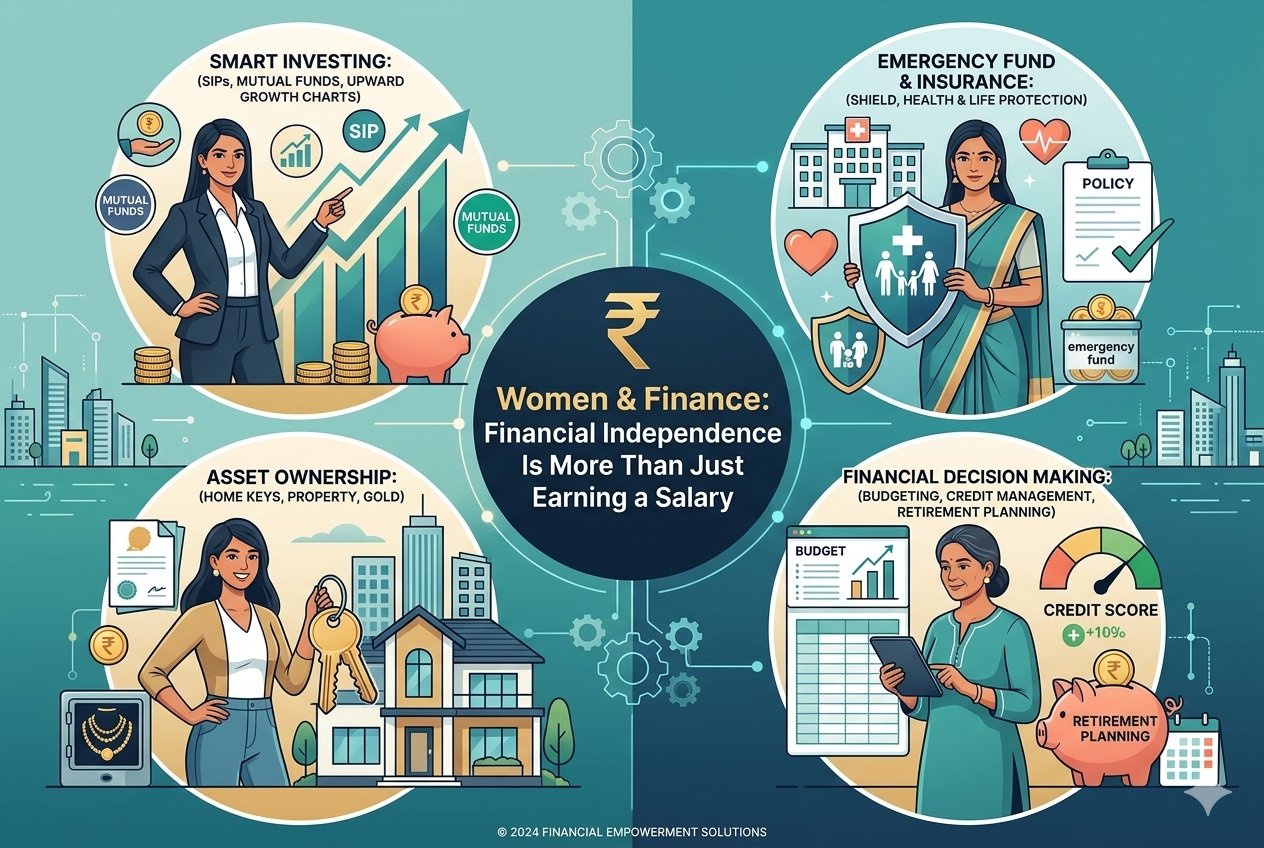
True financial independence begins when a woman has the knowledge, confidence and freedom to make informed financial decisions about her present and future.
Beyond Earning: Understanding Financial Freedom
Over the years, women have made remarkable progress in education, employment, entrepreneurship and leadership. Yet, earning an income does not automatically translate into financial control.
Many women actively contribute to household income but may not participate equally in decisions concerning investments, savings, insurance or long-term financial planning.
Financial independence is not simply about earning money. It is about knowing where that money goes, how it grows and how it can secure the future.
The Financial Knowledge Gap
Financial literacy remains an important area that deserves attention.
Understanding basic concepts such as budgeting, taxation, inflation, insurance, mutual funds, retirement planning and emergency savings can make a significant difference.
Every woman should have the confidence to:
- Maintain her own bank account and financial records.
- Build an emergency fund.
- Understand investment options and associated risks.
- Plan for retirement and long-term financial goals.
- Make informed decisions about loans, insurance and taxation.
Financial awareness is not a luxury; it is an essential life skill.
The Importance of Investment Over Savings
Saving money is important, but simply keeping money aside may not be sufficient to achieve long-term financial goals.
Inflation gradually reduces purchasing power. Therefore, understanding suitable investment opportunities becomes equally important.
Depending on individual goals, financial circumstances and risk tolerance, women can explore options such as fixed deposits, mutual funds, equity investments, government-backed schemes and retirement-oriented products.
The objective should not be to chase quick returns, but to build wealth through informed and disciplined decisions.
Why Financial Independence Matters
Financial independence provides more than economic security. It creates confidence, decision-making power and the ability to face unexpected situations.
A financially aware woman is better positioned to plan for her future, support her family, pursue opportunities and make independent choices.
It also contributes to a stronger economy. When more women participate in financial markets, entrepreneurship and investment activities, the benefits extend beyond individual households.
The Way Forward
Financial empowerment must begin with education and awareness.
Families should encourage daughters to understand money management from an early age. Educational institutions can introduce practical financial literacy. Employers and financial institutions can make financial guidance more accessible to women.
Most importantly, women must be encouraged to take an active role in managing their own finances.
Conclusion: Let Women Earn, Own, Invest and Decide
A woman’s financial journey should not end with receiving a salary or contributing to household expenses.
She should have the confidence to manage her money, the knowledge to grow her wealth and the freedom to make her own financial decisions.
Because true empowerment is not just about having money in your hands; it is about having the knowledge and authority to decide what to do with it.
Financially empowered women don’t just build secure futures for themselves; they contribute to building a financially stronger society.