Rising Fuel Prices Add to Household Expenses and Complicate the Bank of England’s Inflation Battle
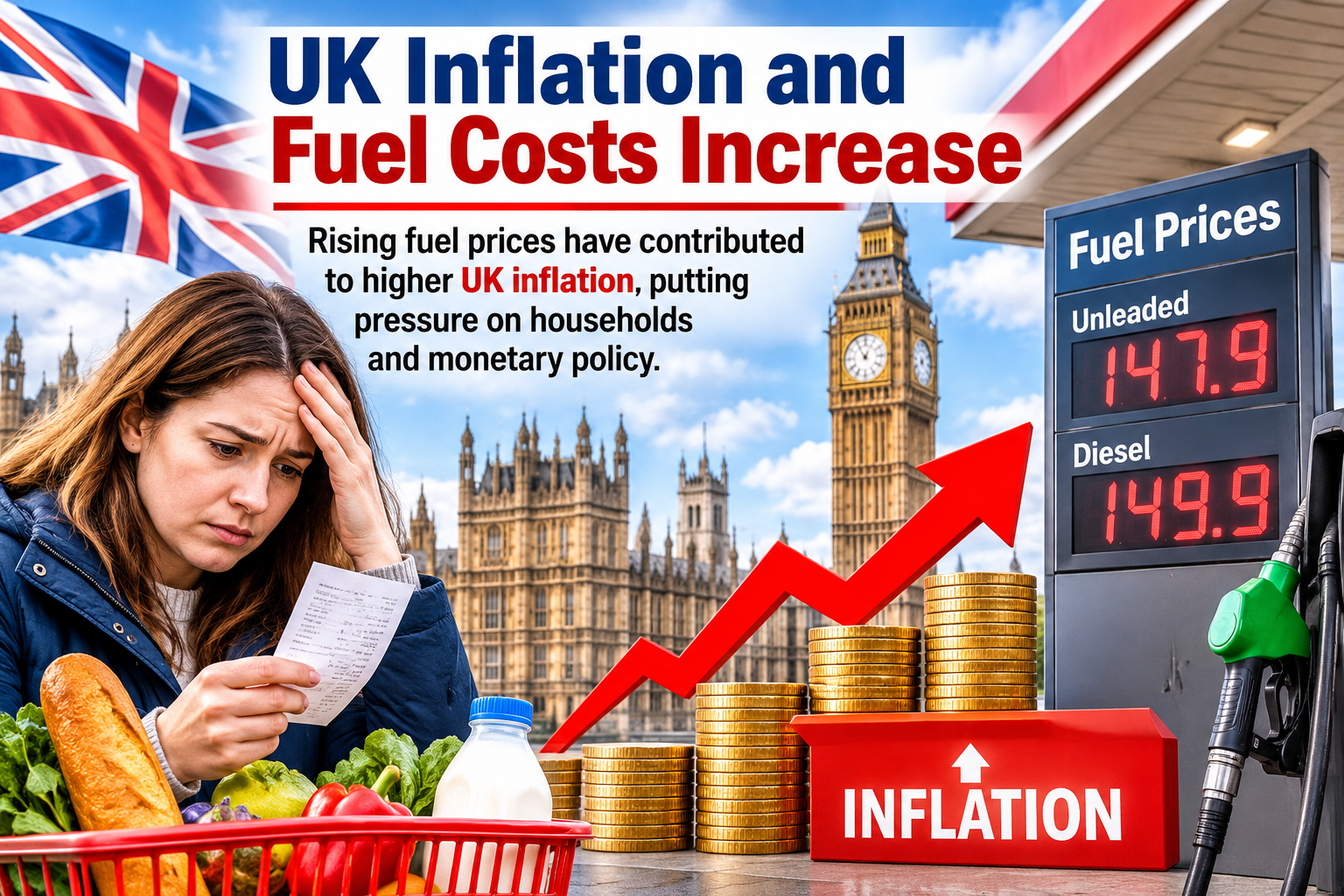
The United Kingdom is facing renewed inflationary pressures as rising fuel prices contribute to higher living costs and create fresh challenges for the country’s economic policymakers. Increasing petrol and diesel prices are putting additional pressure on household budgets, transportation expenses, and business operating costs. As energy and fuel remain essential components of everyday economic activity, fluctuations in their prices can influence inflation across multiple sectors.
The development has raised concerns about the UK’s economic outlook, particularly as households continue to manage the effects of elevated living costs. For policymakers, the situation presents a difficult balancing act between controlling inflation, supporting economic growth, and preventing further financial pressure on consumers.
Rising Fuel Prices: A Major Inflationary Factor
Fuel prices play an important role in determining the overall cost of living. When petrol and diesel prices increase, the effects extend far beyond what consumers pay at filling stations. Transportation companies, logistics providers, manufacturers, retailers, and agricultural businesses all depend on fuel to maintain their operations.
Higher fuel costs can therefore increase the expense of transporting raw materials, delivering finished products, and providing essential services. Businesses facing these additional expenses may eventually pass some of the increased costs on to consumers through higher prices.
This creates a wider inflationary effect throughout the economy. Even products and services that do not directly depend on petroleum can become more expensive because of increased distribution and production costs.
International oil market movements, geopolitical tensions, supply disruptions, production decisions by major oil-producing countries, and fluctuations in the value of the British pound can all influence domestic fuel prices.
As a result, the UK’s inflation outlook remains closely connected to developments in global energy markets.
Household Budgets Under Increasing Pressure
For British households, rising fuel costs represent another challenge in managing everyday expenses. Families that depend on private vehicles for commuting, education, shopping, and other essential activities have limited opportunities to avoid higher petrol and diesel prices.
The impact can be particularly significant for people living in suburban and rural areas, where public transportation alternatives may be limited.
Lower-income households are often more vulnerable because transportation and energy expenses account for a relatively larger share of their disposable income. When these costs increase, families may be forced to reduce spending on non-essential goods, entertainment, dining, and other activities.
This reduction in consumer spending can affect businesses, particularly those operating in retail, hospitality, and leisure industries.
Consequently, rising fuel prices are not simply an energy-sector concern. They can influence consumer confidence, household financial stability, and the broader performance of the UK economy.
Businesses Face Higher Operating Expenses
Businesses across the United Kingdom are also experiencing the consequences of increasing fuel costs. Logistics companies, delivery services, construction firms, agricultural producers, and manufacturers are particularly exposed to changes in transportation and energy prices.
For companies operating with relatively narrow profit margins, even a moderate increase in fuel expenses can create financial difficulties.
Small and medium-sized enterprises may face additional challenges because they often have less bargaining power and fewer resources to absorb unexpected increases in operating costs.
Some businesses may respond by adjusting product prices, introducing delivery charges, reducing operational expenses, or delaying expansion plans.
However, when multiple industries increase prices simultaneously, inflationary pressures can become more widespread.
The challenge for businesses is to protect profitability without placing excessive financial pressure on customers who are already dealing with higher living costs.
Bank of England Faces a Difficult Monetary Policy Decision
Rising fuel prices also complicate the monetary policy decisions of the Bank of England. The central bank’s primary responsibility is to maintain price stability, with an inflation target of 2%.
However, fuel-driven inflation creates a particularly complicated situation because monetary policy cannot directly influence global oil production or international energy supply.
If higher fuel prices contribute to a temporary increase in inflation, policymakers may choose to look beyond short-term fluctuations and assess underlying price pressures.
However, if increased transportation and energy costs begin influencing wages, business pricing decisions, and inflation expectations, the risk of persistent inflation becomes greater.
Maintaining higher interest rates can help control broader demand and prevent inflation expectations from becoming entrenched. Nevertheless, tighter monetary policy also increases borrowing costs for households and businesses.
Mortgage repayments, business loans, and consumer credit can become more expensive, potentially slowing economic activity.
The Bank of England must therefore carefully assess whether inflationary pressures are temporary or likely to become more persistent before making significant policy adjustments.
Impact on Economic Growth and Consumer Confidence
The combination of rising fuel prices and higher living expenses could weaken the UK’s economic momentum. When households spend more on essential transportation and energy, they have less money available for discretionary consumption.
Lower consumer spending can affect business revenues, investment decisions, and employment opportunities.
At the same time, businesses facing higher operational expenses may postpone recruitment, reduce investment, or increase prices to protect their financial positions.
This creates the possibility of a challenging economic environment in which inflation remains elevated while economic growth becomes weaker.
Such conditions require careful attention from policymakers because controlling inflation should not come at the expense of unnecessarily damaging economic activity.
The Road Ahead: Energy Stability and Economic Resilience
The future direction of UK inflation will depend partly on global oil prices, energy supply conditions, currency movements, and domestic economic developments.
Improving energy efficiency, expanding renewable energy capacity, strengthening transportation infrastructure, and encouraging investment in alternative fuels could help reduce the economy’s long-term vulnerability to international energy price fluctuations.
The government can also support vulnerable households through carefully targeted assistance rather than relying entirely on broad-based financial measures.
Businesses, meanwhile, can strengthen their resilience through better energy management, operational efficiency, and investment in less fuel-intensive technologies.
The Worldonomics Times View
The Worldonomics Times believes that rising fuel prices highlight a fundamental weakness in the modern economy: the continued dependence of household budgets and business operations on volatile global energy markets.
Although fuel price increases may initially appear to be a temporary cost issue, their influence can spread throughout the economy, affecting transportation, food prices, manufacturing, retail, and consumer confidence.
The UK government and the Bank of England must adopt a balanced approach. Inflation control remains essential, but policymakers should recognise that supply-driven price increases cannot be resolved through interest-rate adjustments alone.
Greater investment in renewable energy, improved public transportation, stronger domestic energy resilience, and targeted support for financially vulnerable households should form part of a broader economic strategy.
The Bank of England must also distinguish between temporary energy-related inflation and persistent underlying price pressures to avoid unnecessary policy tightening.
Ultimately, the UK’s economic stability will depend on its ability to manage immediate inflationary challenges while building a more affordable, efficient, and energy-resilient economy.
The message is clear: controlling inflation requires more than monetary discipline; it also demands long-term energy security, responsible policymaking, and sustainable economic planning.