Higher Energy Costs, Currency Volatility and Tighter Financial Conditions Challenge Economic Stability Across Developing Economies
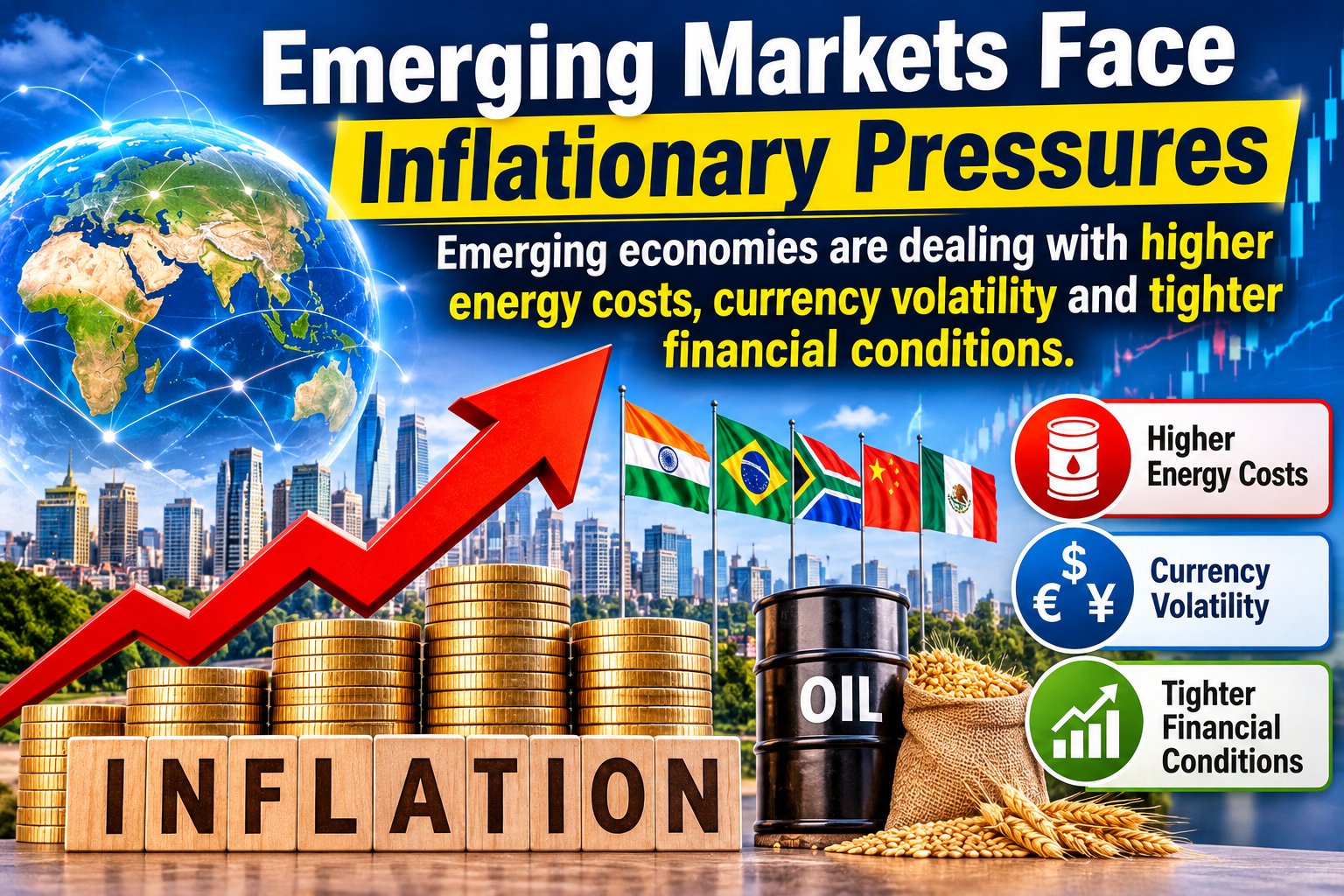
Emerging markets are facing growing economic challenges as rising energy costs, currency fluctuations, and tighter global financial conditions create renewed inflationary pressures. Developing economies across Asia, Africa, Latin America, and Eastern Europe are experiencing increasing difficulties in maintaining price stability while supporting economic growth and protecting household purchasing power.
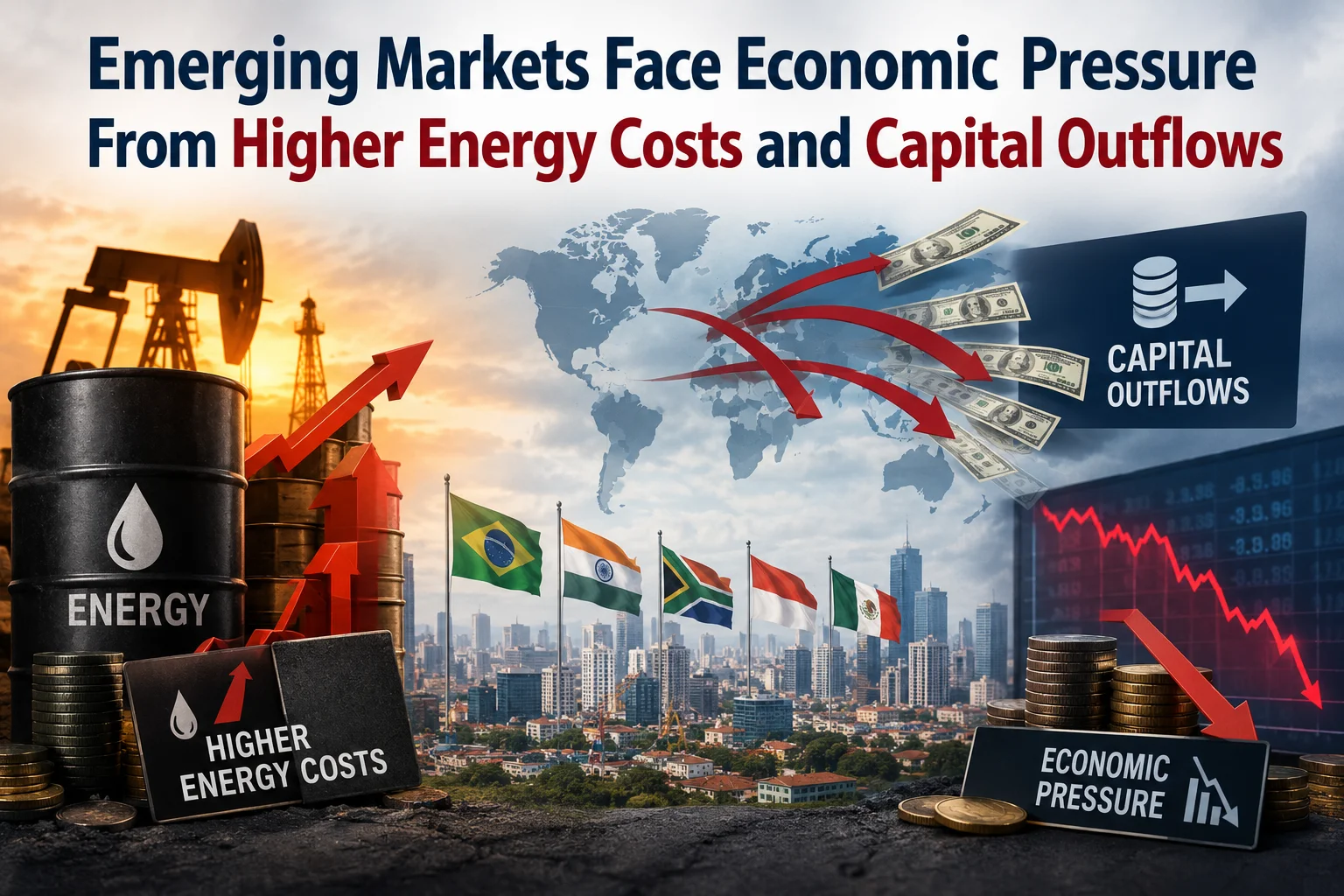
Although emerging markets have made significant progress in strengthening their financial systems and expanding international trade, their dependence on global commodity markets and foreign investment makes them particularly vulnerable to external economic shocks. Rising fuel prices, expensive imports, fluctuating exchange rates, and higher borrowing costs are creating additional pressure on governments, businesses, and consumers.
The situation highlights the growing interconnectedness of the global economy, where developments in major financial centres can have significant consequences for developing nations.
Rising Energy Costs Increase Inflationary Pressure
Energy prices remain one of the most important factors influencing inflation across emerging economies. Many developing countries depend heavily on imported crude oil, natural gas, and refined petroleum products to meet their domestic energy requirements.
When international energy prices increase, these countries face higher import bills, which can place pressure on government finances, foreign-exchange reserves, and domestic currencies.
Higher fuel costs also influence transportation, electricity generation, manufacturing, agriculture, and food distribution. Businesses facing increased operating expenses may transfer these costs to consumers, contributing to broader inflationary pressures.
For households, rising energy and transportation expenses reduce disposable income and limit spending on essential and non-essential goods.
Countries with limited domestic energy resources are particularly exposed to these developments because they have fewer opportunities to protect their economies from international price fluctuations.
Currency Volatility Creates Additional Economic Challenges
Currency depreciation is another major concern for emerging markets. When domestic currencies weaken against major international currencies, particularly the US dollar, imported goods and essential commodities become more expensive.
This creates imported inflation, especially in countries that rely on foreign supplies of fuel, machinery, food products, medicines, and industrial raw materials.
A weaker currency can also increase the cost of servicing foreign-currency-denominated government and corporate debt. Governments and businesses may therefore need to allocate more domestic revenue towards meeting international financial obligations.
Currency volatility can also influence investor confidence. When investors become concerned about exchange-rate stability, they may reduce their exposure to emerging-market assets and move capital towards currencies and securities perceived as safer.
Such capital movements can create further pressure on exchange rates, potentially producing a cycle of currency weakness, higher import costs, and additional inflation.
Tighter Global Financial Conditions Increase Borrowing Costs
The monetary policies of major central banks have a significant influence on emerging-market financial conditions.
When advanced economies maintain relatively high interest rates, international investors may find developed-market government bonds more attractive. This can reduce capital flows towards developing economies, particularly those with higher perceived financial risks.
At the same time, emerging-market governments and businesses may face higher borrowing costs when accessing international financial markets.
Countries with substantial external debt obligations are especially vulnerable because refinancing existing loans becomes more expensive.
Higher borrowing costs can also discourage private investment, delay infrastructure development, and reduce business expansion.
For developing economies that depend on international capital to finance industrialisation and economic development, prolonged financial tightening can become a major obstacle to long-term growth.
Household Budgets and Businesses Under Pressure
The combined impact of inflation, currency depreciation, and higher interest rates is increasingly affecting households and businesses.
Rising food, fuel, electricity, and transportation prices reduce consumers’ purchasing power. Lower-income households are particularly vulnerable because essential expenses represent a larger proportion of their monthly budgets.
Businesses are also dealing with higher production costs, expensive imported materials, and increasing financing expenses.
Small and medium-sized enterprises may experience greater difficulties because they often have limited access to affordable credit and fewer financial resources to absorb unexpected economic shocks.
When companies reduce investment, delay recruitment, or increase product prices, the effects can extend throughout the economy.
Consequently, persistent inflationary pressures may weaken consumer confidence, industrial activity, and overall economic growth.
Central Banks Face Difficult Policy Decisions
Central banks in emerging economies are facing complicated monetary policy decisions. Their primary challenge is to control inflation without unnecessarily weakening economic growth.
When inflation rises, policymakers may increase interest rates to reduce excessive demand and support currency stability. However, higher interest rates also increase borrowing costs for households and businesses.
In economies where inflation is primarily driven by imported energy and supply-chain costs, monetary tightening may have limited immediate influence over the underlying causes of rising prices.
Policymakers must therefore carefully assess inflation expectations, exchange-rate movements, domestic demand, and international commodity prices.
Maintaining credible monetary policies, strengthening foreign-exchange reserves, and communicating decisions transparently can help improve investor confidence.
Regional Outlook: Different Economies, Shared Challenges
Emerging markets are not experiencing identical economic conditions.
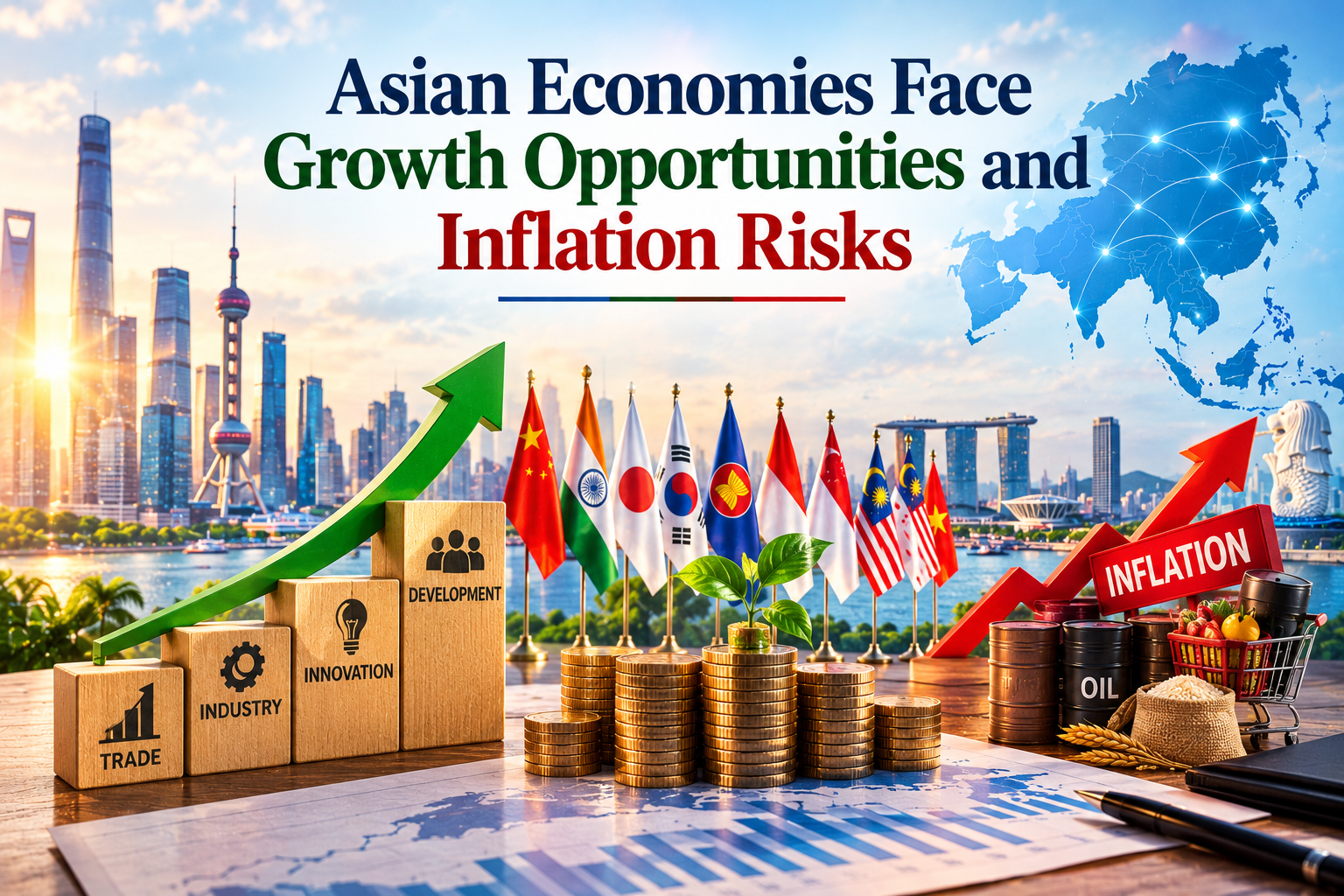
Asian economies face varying levels of exposure to imported energy, international trade, and foreign investment. Some countries benefit from strong manufacturing industries and diversified exports, while others remain vulnerable to commodity price movements.
In Latin America, several economies are influenced by currency fluctuations, external financing requirements, and changes in global commodity demand.
African economies face challenges associated with energy imports, food security, foreign-currency shortages, and limited fiscal flexibility.
Despite these differences, the common challenge remains the need to maintain economic stability while managing external financial pressures.
Countries with stronger institutions, diversified economies, responsible fiscal policies, and adequate foreign-exchange reserves may be better equipped to withstand international economic shocks.
Strategies for Building Economic Resilience
Emerging economies need long-term strategies to reduce their vulnerability to global inflationary pressures.
Investment in renewable energy, domestic manufacturing, agricultural productivity, and modern transportation infrastructure can reduce dependence on expensive imports.
Governments should also strengthen public finances, improve tax administration, encourage private investment, and develop deeper domestic financial markets.
Targeted support for vulnerable households can help protect purchasing power without placing excessive pressure on government budgets.
Furthermore, regional trade cooperation and diversified international partnerships can help developing economies improve supply-chain security and reduce their dependence on individual markets.
The Worldonomics Times View
The Worldonomics Times believes that the inflationary challenges facing emerging markets represent more than a temporary economic difficulty. They highlight structural vulnerabilities that have developed through dependence on imported energy, external borrowing, and international capital flows.
While global economic developments remain beyond the control of individual governments, domestic economic policies can significantly influence how effectively countries respond to external shocks.
Emerging economies must prioritise financial discipline, currency stability, energy diversification, and stronger domestic production capabilities. Central banks should maintain credible inflation-control strategies, while governments should focus on targeted assistance and productive public investment.
At the same time, international financial institutions and developed economies should recognise the disproportionate impact of tighter global financial conditions on developing nations.
Emerging markets have considerable potential to become important drivers of future global economic growth. However, unlocking this potential requires stronger economic foundations, sustainable financial management, and greater resilience against international uncertainty.
The message is clear: emerging economies must move beyond managing short-term inflation and focus on building stronger, more diversified, and financially resilient economic systems.