Investors Closely Monitor Inflation, Bond Yields, Oil Prices and Central-Bank Policies Amid Global Economic Uncertainty
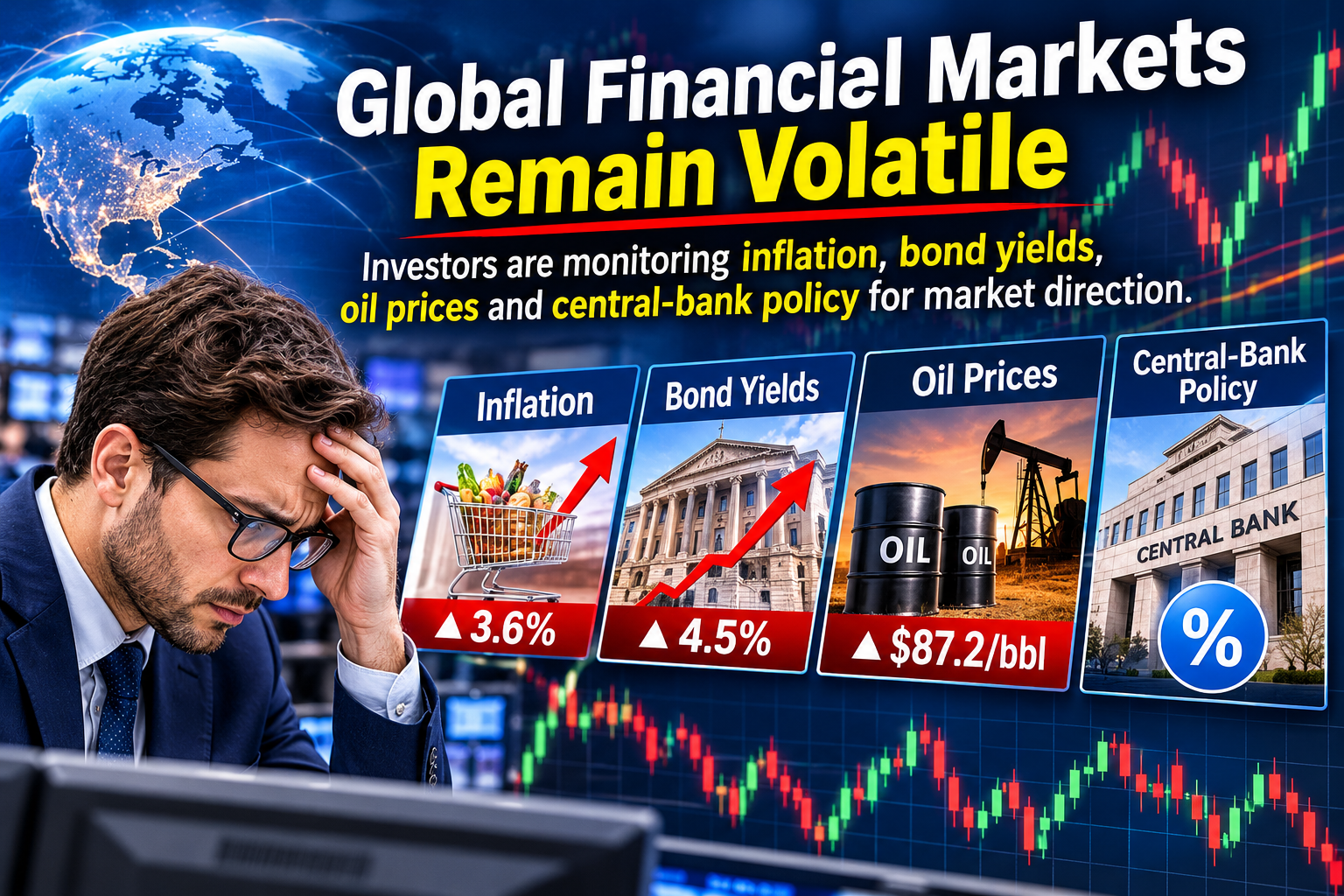
Global financial markets continue to experience volatility as investors navigate an increasingly uncertain economic environment. Persistent inflationary pressures, fluctuating government bond yields, changing oil prices, and evolving central-bank policies are influencing investment decisions across major financial markets. From equities and currencies to commodities and government securities, market participants are closely monitoring economic developments to identify potential opportunities and manage financial risks.
The current environment reflects a complex combination of economic, geopolitical, and monetary factors. Investors are becoming more cautious as uncertainty surrounding inflation, interest rates, government borrowing, and global economic growth continues to influence market sentiment. These developments are making it increasingly difficult to predict the direction of financial markets in the short term.
Inflation Remains a Major Market Concern
Inflation continues to be one of the most important indicators shaping global financial market movements. Although several economies have experienced periods of moderating price pressures, concerns remain about the possibility of inflation staying above central-bank targets for longer than expected.
Rising energy costs, transportation expenses, supply-chain disruptions, and wage pressures can contribute to renewed inflationary trends. Higher prices reduce consumer purchasing power and can affect corporate profitability by increasing production and operating expenses.
For investors, inflation data provides important signals about the future direction of monetary policy. Stronger-than-expected inflation figures may increase expectations of higher interest rates, while signs of easing price pressures could improve confidence in potential monetary easing.
Consequently, every major inflation report has the potential to influence equity valuations, bond markets, currency movements, and investment strategies.
Bond Yields Influence Global Investment Decisions
Government bond yields have become another major focus for financial markets. Sovereign bonds, particularly those issued by the United States, Germany, Japan, and the United Kingdom, serve as important benchmarks for global borrowing costs.
When bond yields increase, investors may find government securities more attractive compared with riskier investments such as equities. Higher yields can also increase borrowing costs for businesses and households, potentially affecting corporate investment and consumer spending.
On the other hand, declining bond yields may support equity markets by reducing financing costs and improving the attractiveness of future corporate earnings.
Investors are therefore paying close attention to government borrowing requirements, inflation expectations, fiscal deficits, and central-bank decisions to understand the direction of bond markets.
Significant movements in sovereign yields can quickly influence international capital flows and create volatility across global financial assets.
Oil Prices Add Another Layer of Uncertainty
The global energy market is also playing an important role in shaping investor sentiment. Crude oil prices remain sensitive to geopolitical developments, production decisions, supply disruptions, and expectations surrounding global demand.
Higher oil prices can increase transportation, manufacturing, and energy expenses, contributing to inflationary pressures across several economies.
For oil-importing countries, rising crude prices can also increase import bills, place pressure on national currencies, and widen trade deficits.
Conversely, lower oil prices may provide relief to consumers and businesses by reducing energy-related expenses. However, a sharp decline in oil prices can sometimes signal concerns about weakening global economic demand.
Energy companies, airlines, transportation businesses, manufacturers, and commodity traders are particularly exposed to these developments.
As a result, oil price movements remain an important indicator for investors assessing the broader global economic outlook.
Central Banks Remain at the Centre of Market Attention
Central-bank policies continue to influence the direction of global financial markets. Institutions such as the US Federal Reserve, European Central Bank, Bank of England, and Bank of Japan play a crucial role in determining monetary conditions through interest-rate decisions and other policy measures.
When inflation remains persistent, central banks may maintain restrictive monetary policies to control price increases. Although this approach can help stabilise inflation, it may also increase borrowing costs and slow economic activity.
Alternatively, when inflation shows sustained improvement and economic growth weakens, policymakers may consider reducing interest rates to support investment and consumption.
However, investors cannot rely solely on expectations of interest-rate cuts. Central banks must balance inflation control with economic growth, employment conditions, and financial stability.
Even small changes in policymakers’ statements or economic forecasts can trigger significant movements in stock markets, currencies, and government bonds.
Equity Markets Experience Changing Investor Sentiment
Global stock markets are particularly sensitive to changes in interest-rate expectations and economic growth forecasts.
Technology companies, financial institutions, manufacturing businesses, and consumer-focused industries may experience different market reactions depending on the economic environment.
Higher interest rates can put pressure on growth-oriented companies because future earnings become less attractive when discounted at higher rates. Meanwhile, certain financial institutions may benefit from improved lending margins, depending on funding costs and broader credit conditions.
Investors are increasingly focusing on corporate earnings, balance-sheet strength, cash flows, and business resilience rather than relying entirely on market momentum.
This shift towards fundamentals reflects the growing importance of managing risk during periods of economic uncertainty.
Emerging Markets Face Additional Challenges
Volatility in major financial markets can create significant challenges for emerging economies.
When interest rates in advanced economies remain relatively high, international investors may move capital towards assets offering attractive returns and perceived stability.
Such movements can place pressure on emerging-market currencies, increase external borrowing costs, and create difficulties for countries dependent on international capital.
Higher